
TL;DR

Get backup power and energy gear delivered free with Prime
- Fast, free delivery on millions of items
- Prime Video, Amazon Music and more included
- Member-only deals all year
A Green Building Advisor reader asked how to insulate a 30-by-32-foot post-frame barn being remodeled as a wood shop in climate zone 4A. The owner is weighing an unvented roof with reclaimed XPS insulation above the sheathing against adding a ventilated roof channel, but the report contains no expert response or final design decision.
A homeowner planning to convert a 30-by-32-foot post-frame barn in climate zone 4A into a wood shop is seeking advice on whether to use an unvented roof assembly or build in roof ventilation. The Green Building Advisor question lays out the proposed insulation and intermittent-use plans, but the report provided does not include an expert answer or a confirmed construction decision.
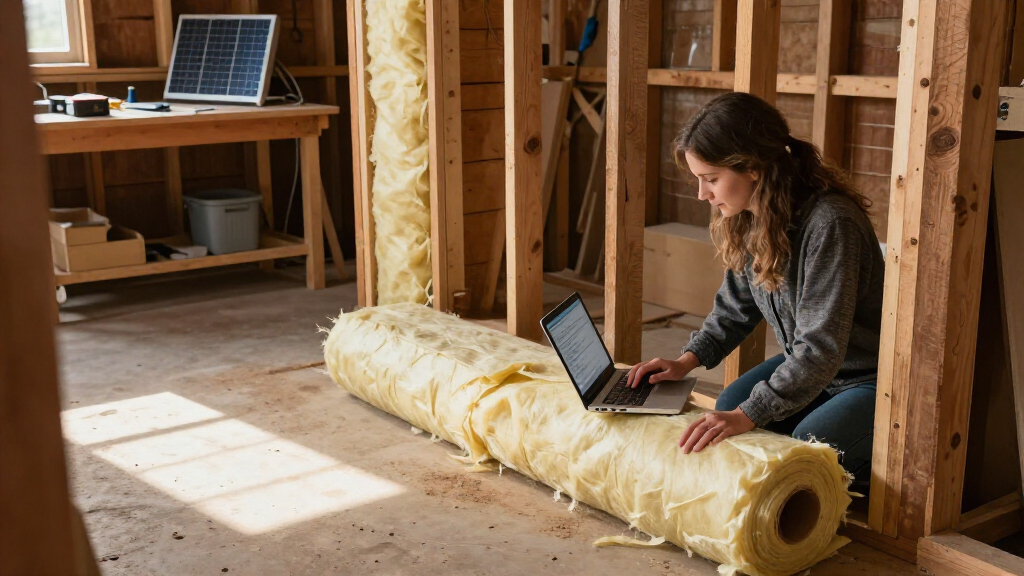
The owner expects to use the building mainly as a weekend workshop, with a window air conditioner and wood stove at first. The barn would not be heated or cooled continuously. The owner hopes insulation will reduce energy use when the space is occupied and says full-time use, possibly with added HVAC, may come after retirement. The stated targets are about R-38 to R-45 at the roof and R-19 in the walls.
The planned work includes removing the metal exterior, replacing some water-damaged girts and doors or windows, and adding sheathing, tape and a water-resistive barrier to the roof and walls. The barn has a full foundation. The owner also plans to excavate its dirt floor, add insulation and a vapor barrier, and pour a slab. The roof has 2-by-10 rafters spaced 24 inches on center, running to a central ridge beam, with a cathedral-style ceiling and a loft.
Because the rafters end flush with the exterior wall girts, the owner says adding roof ventilation could require extending the rafters to form soffits and creating a clear path for air. Existing conduit near the purlins may obstruct that route. The alternative under consideration is an unvented roof with insulation above the sheathing, potentially using reclaimed three-inch XPS foam board from a commercial roof replacement, alongside fiberglass batts inside. The owner’s estimated roof rating of R-40 to R-45 is conditional on the reclaimed foam’s actual performance.
Moisture Risks in Intermittent Use
The question matters because the proposed building will be insulated but not kept at a steady temperature. That pattern makes the owner’s concern about moisture management central to the design: the post asks whether sealing the barn without continuous climate control could create problems, and whether a dehumidifier would be needed during periods when it sits unused. The source does not establish that either outcome will occur.
The roof choice also affects how much work is needed before the new exterior goes on. A vented approach may require changes at the eaves and a continuous ventilation route, while an unvented assembly depends on the selected layers and their installation. The owner says local pole-barn contractors have recommended spray foam, but the question gives no details about their proposed assembly or supporting analysis. Their advice is therefore a reported recommendation, not a verified solution for this specific building.
For readers planning similar conversions, the report is a snapshot of a real design problem rather than a construction verdict. It identifies the variables that need to be resolved—roof layers, air movement, occasional conditioning, existing obstructions and reclaimed insulation—without showing which assembly is appropriate or whether the proposed materials meet the owner’s targets.
As an affiliate, we earn on qualifying purchases.
The Barn’s Planned Retrofit
The owner is planning a substantial retrofit, not simply adding insulation to an unchanged barn. Metal siding and roofing will be removed, some damaged framing components and openings will be replaced, and sheathing and a water-resistive barrier are being considered. The planned slab work adds another insulation and vapor-control decision, though the question’s main uncertainty is the roof.
The site is identified as climate zone 4A, and the roof framing is described as rafters rather than trusses. That distinction is relevant to the owner’s ventilation concern: the rafters end flush with the wall girts, and the post says there is no existing soffit route. The proposed above-sheathing XPS is reclaimed material, so the owner does not assume it will deliver its nominal rating; the stated roof R-value is an estimate, not a tested result for the proposed assembly.
The question also reflects a gap between the owner’s long-term plans and immediate use. The shop will initially be occupied only on weekends and heated or cooled as needed, while more regular occupancy and HVAC are possibilities later. The supplied report does not include subsequent discussion, professional calculations or a record of work completed.
“Every pole barn contractor I’ve spoken to around here just says to spray foam it and be done.”
— The homeowner, describing conversations with local contractors
As an affiliate, we earn on qualifying purchases.
No Assembly or Expert Answer Yet
The supplied report does not say whether the owner ultimately chose a vented or unvented roof, whether the reclaimed XPS was inspected or used, or whether an expert answered the question. It also does not establish whether the building would need a dehumidifier when unoccupied. Those are questions posed by the homeowner, not confirmed findings.
Other details needed to evaluate the design are absent, including the exact roof-layer sequence, the condition and specifications of the reclaimed foam, air-sealing details, and how the building will be operated through seasonal temperature and humidity changes. The question does not provide calculations or a project-specific moisture analysis, so its estimated insulation values and concerns should not be treated as a completed technical assessment.
XPS foam board insulation for roofs
As an affiliate, we earn on qualifying purchases.
As an affiliate, we earn on qualifying purchases.
Design Decisions Before Construction
The next step described in the report is not a scheduled milestone; it is the owner’s need to resolve the roof design before proceeding with the retrofit. That decision would need to account for the proposed sheathing and water-control layers, the possible ventilation path, the conduit near the purlins and the building’s intermittent heating and cooling. The report supplies no timeline for a final choice.
The owner may also need to confirm the condition and performance specifications of the reclaimed insulation before relying on it for the stated R-value target. Any final assembly and moisture-control plan remains unconfirmed in the source. Until a response or project update is available, the question documents the trade-offs the owner is weighing rather than a proven recommendation for other barns.
barn moisture control dehumidifier
As an affiliate, we earn on qualifying purchases.
As an affiliate, we earn on qualifying purchases.
Key Questions
What is the homeowner planning to do with the barn?
The owner plans to remodel the 30-by-32-foot barn as a weekend wood shop, initially using a window air conditioner and wood stove. More regular occupancy and HVAC are possible later, but are not confirmed plans.
Which roof insulation options are being considered?
The owner is weighing an unvented roof with insulation above the sheathing and fiberglass batts inside against adding a ventilation channel with soffit and ridge vents. The owner also mentions a possible shuttered gable vent and fan setup, but no option has been selected.
Is the reclaimed XPS insulation confirmed for the project?
No. The owner says three-inch reclaimed XPS is available from a commercial roof replacement and might be used. The report does not confirm that it was purchased, inspected or installed.
Does the report say a dehumidifier will be required?
No. The homeowner asks whether a dehumidifier might be needed when the building is unconditioned, but the supplied report contains no answer or finding on that point.
Has an expert recommended a final roof assembly?
No expert response is included in the supplied material. The homeowner reports that local contractors recommended spray foam, but the article does not provide their names, design details or an independent evaluation.
Source: rss
Halloween Picks
halloween
As an affiliate, we earn on qualifying purchases.