Prime Big Deal Days is one of the best windows of the year to grab a solar generator, but the range of options is enormous — everything from an 88Wh emergency brick to a 50kWh-capable home backup beast. My top pick overall is the Jackery Solar Generator 1000 v2, which hits the sweet spot of capacity, recharging speed, and portability for most buyers. If you need whole-home outage coverage instead, the Jackery Solar Generator 5000 Plus is the premium standout, while the Apowking 300W with 40W panel is the value pick for campers and occasional users. The main tradeoff you’ll face during the sale is paying for capacity and inverter wattage you may never use versus getting a unit that can’t run your fridge when the power goes out. Read on for the full ranked breakdown.

Get backup power and energy gear delivered free — and shop member deals
- Fast, free delivery on millions of items
- Access to Prime Big Deal Days deals on October 6–7
- Prime Video, Amazon Music and more included
Complete the kit


Key Takeaways
- Capacity is the biggest price driver in this lineup: units cluster at roughly 100Wh, 1000Wh, and 3000Wh-plus tiers, and picking the wrong tier costs you far more than any feature difference within a tier.
- The included solar panel wattage rarely matches the battery’s potential — the ABOK Ark3600 ships with 600W of panels while several 300W-class stations include just 30-40W, meaning recharge times vary from hours to more than a full day.
- Expandability separated the long-term winners: the AFERIY 1024Wh (expandable to 5120Wh) and the Jackery 5000 Plus let you start small and grow, which is the smarter play during a sale event.
- Budget models under 200Wh (HOWEASY, MARBERO) are sold as solar generators but function more as USB power banks — fine for phones and lights, inadequate for any appliance.
- Two products at nearly identical specs — the PowerMax 3600 SE and Jackery HomePower 3600 Plus — differ mainly in battery chemistry and app control, which is where the real decision lives at the high end.
| Jackery HomePower 3600 Plus Portable Power Station with Two 200W Solar Panels |  | Best Overall for Whole-Home Backup | Capacity: 3,584Wh | AC Output: 3,600W (7,200W parallel) | Expandable Capacity: Up to 21kWh per unit, 43kWh multi-unit | VIEW LATEST PRICE | See Our Full Breakdown |
| Apowking 300W Portable Power Station with 40W Solar Panel |  | Best Budget Kit for Campers | Power Output: 300W rated / 600W peak | Battery Capacity: 220Wh (60,000mAh) | Solar Panel: 40W monocrystalline, 24% efficiency | VIEW LATEST PRICE | See Our Full Breakdown |
| ABOK Ark2000 1536Wh 2000W Portable Power Station with Asp200 200W Solar Panel |  | Best Value for Serious Power | Capacity: 1536Wh (expandable to 4608Wh) | Output Power: 2000W | Battery Chemistry: LiFePO4, 4000+ cycles | VIEW LATEST PRICE | See Our Full Breakdown |
| AFERIY Portable Power Station 1024Wh, Expandable Solar Generator up to 5120Wh |  | Best for Home Backup on a Budget | Capacity: 1024Wh (expandable to 5120Wh) | AC Output: 1800W (3600W peak) | Battery Type: LiFePO4, 4000+ cycles | VIEW LATEST PRICE | See Our Full Breakdown |
| Apowking 100W Portable Power Station with 40W Solar Panel |  | Best Ultra-Light Emergency Pick | Capacity: 146Wh / 39,600mAh | Running Wattage: 100W (200W peak) | Solar Panel: 40W monocrystalline, 20.5% efficiency | VIEW LATEST PRICE | See Our Full Breakdown |
| ABOK Ark3600 Portable Power Station with 3x200W Solar Panels |  | Best for Whole-Home Backup | Capacity: 3840Wh (expandable to 11520Wh) | Battery Type: EV-grade LiFePO4, 4000+ cycles | Solar Input: Up to 2000W | VIEW LATEST PRICE | See Our Full Breakdown |
| Jackery Solar Generator 300 with 40W Solar Panel |  | Best Ultralight Travel Pick | Capacity: 292Wh | AC Output: 300W rated, 600W peak | Weight: 7.5 lbs | VIEW LATEST PRICE | See Our Full Breakdown |
| HOWEASY H120 120W Portable Power Station with 30W Solar Panel |  | Best Minimalist Camping Kit | Capacity: 88Wh | Continuous Output: 120W (150W peak) | Solar Panel: 30W folding | VIEW LATEST PRICE | See Our Full Breakdown |
| ZeroKor 300W Portable Power Station with 60W Solar Panel | 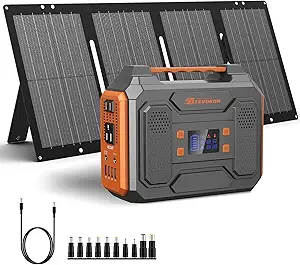 | Best Emergency Kit Value | Max Output: 300W | Solar Panel: 60W monocrystalline, 20.5% efficiency | AC Outlets: 2 | VIEW LATEST PRICE | See Our Full Breakdown |
| MARBERO 155Wh Portable Solar Generator with 30W Solar Panel |  | Best Starter Bundle | Capacity: 155Wh (42,000mAh) | Solar Panel: 30W, 23% efficiency, IP65 rated | AC Outlets: 2 x 100W (110V) | VIEW LATEST PRICE | See Our Full Breakdown |
| DaranEner 300W Portable Power Station with 30W Solar Panel |  | Best for Frequent Travelers | Battery capacity: 192Wh | Battery type: LiFePO4 | Weight: 5.84 lbs | VIEW LATEST PRICE | See Our Full Breakdown |
| Jackery Solar Generator 1000 v2 with 200W Solar Panel |  | Best Mid-Size All-Rounder | Capacity: 1,070Wh | AC output: 1,500W (3,000W surge) | Battery type: LFP, 4,000+ cycles | VIEW LATEST PRICE | See Our Full Breakdown |
| PowerMax 3600 SE 3600W Portable Power Station with Two 200W Solar Panels |  | Best for Home Backup Value | Battery capacity: 3,600Wh LiFePO4 | Continuous output: 3,600W (7,200W surge) | Output ports: 14, including 4 AC outlets and 2 × 100W USB-C | VIEW LATEST PRICE | See Our Full Breakdown |
| EnginStar 300W Portable Power Station with 60W Foldable Solar Panel |  | Best Budget Starter Kit | Capacity: 296Wh / 80,000mAh lithium-ion | AC output: 2 × 110V pure sine wave, 300W | Weight: 6.5 lbs (station) + 4 lbs (panel) | VIEW LATEST PRICE | See Our Full Breakdown |
| Jackery Solar Generator 5000 Plus with 2x 200W Solar Panels |  | Best Whole-Home Backup | Capacity: 5,040Wh, expandable to 60kWh | AC output: 7,200W rated / 14,400W surge, 120V/240V | Battery chemistry: LiFePO4 with ChargeShield 2.0 | VIEW LATEST PRICE | See Our Full Breakdown |
| Prime Big Deal Days solar generator | Capacity | Weight |
|---|---|---|
| Jackery HomePower 3600 Plus Po | 3,584Wh | — |
| Apowking 300W Portable Power S | — | 5 lbs |
| ABOK Ark2000 1536Wh 2000W Port | 1536Wh (expandable to 4608Wh) | — |
| AFERIY Portable Power Station | 1024Wh (expandable to 5120Wh) | — |
| Apowking 100W Portable Power S | 146Wh / 39,600mAh | 3.3 lbs |
| ABOK Ark3600 Portable Power St | 3840Wh (expandable to 11520Wh) | — |
| Jackery Solar Generator 300 wi | 292Wh | 7.5 lbs |
| HOWEASY H120 120W Portable Pow | 88Wh | 2.3 lbs station, 2.76 lbs panel |
| ZeroKor 300W Portable Power St | — | — |
| MARBERO 155Wh Portable Solar G | 155Wh (42,000mAh) | 3.7 lbs |
| DaranEner 300W Portable Power | — | 5.84 lbs |
| Jackery Solar Generator 1000 v | 1,070Wh | 23.8 lbs |
| PowerMax 3600 SE 3600W Portabl | — | — |
| EnginStar 300W Portable Power | 296Wh / 80,000mAh lithium-ion | 6.5 lbs (station) + 4 lbs (panel) |
| Jackery Solar Generator 5000 P | 5,040Wh, expandable to 60kWh | — |
More Details on Our Top Picks
Jackery HomePower 3600 Plus Portable Power Station with Two 200W Solar Panels
If a Prime Big Deal Days purchase is your chance to finally solve outage anxiety, this is the kit that justifies the splurge. With 3,584Wh of capacity and 3,600W of output, the HomePower 3600 Plus runs refrigerators, sump pumps, and even portable AC units simultaneously — something no smaller kit here can touch. Where the ABOK Ark2000 tops out at 2000W and 1536Wh, the Jackery doubles both figures and then keeps going: expandable to 21kWh per unit, or 43kWh when paired, which is genuine whole-home territory.
The tradeoffs are real, though. It’s heavy, so the wheels and telescopic handle aren’t a luxury — they’re required. And the station and solar panels ship separately, so don’t expect everything on day one.
Pros:- 3,600W output with 7,200W parallel mode handles major appliances
- Expands to 21kWh per unit or 43kWh with multiple units
- Four charging methods including hybrid AC+DC in 2 hours
- Wheels and telescopic handle make the weight manageable
Cons:- Power station and solar panels arrive in separate packages
- Two-week runtime claim depends heavily on your actual power draw
- Highest-cost option in this lineup by a wide margin
Best for: Homeowners who want blackout-proof backup power that can scale into whole-home capacity over time
Not ideal for: Campers and van lifers — at this capacity and weight it’s overkill and impractical to move regularly
- Capacity:3,584Wh
- AC Output:3,600W (7,200W parallel)
- Expandable Capacity:Up to 21kWh per unit, 43kWh multi-unit
- Battery Cycles:6,000
- Charging Options:Hybrid AC+DC, AC, solar, gas generator
- Recharge Time:2 hrs hybrid, 2.5 hrs AC, 4 hrs solar
- Included Solar Panels:Two 200W panels
- Design:Wheels and telescopic handle
Our verdict“Buy this if you’re preparing your home for multi-day outages and want capacity you can grow into rather than replace.”
Apowking 300W Portable Power Station with 40W Solar Panel
Not everyone shopping Prime Big Deal Days needs to power a house. The Apowking HP200L is built for the camper or emergency-prep buyer who wants a complete solar generator kit without the sticker shock — station, 40W panel, and seven ports in one purchase. At 5 lbs and fanless, it’s noticeably quieter in a tent than anything else in this roundup, and the built-in LED floodlight doubles as camp lighting for 30+ hours.
The compromises are straightforward: 300W won’t run anything with a heating element or compressor, and the 40W panel recharges slowly on its own — this is an overnight-and-morning device, not an off-grid workhorse. Compared with the Apowking 100W model, the extra output and pure sine wave AC outlets make this the smarter pick if you can spend a little more, since modified-wave units can struggle with sensitive electronics.
Pros:- Fanless, silent operation is ideal for tents and bedrooms
- Complete kit includes 40W panel with 10 DC connectors
- Two pure sine wave AC outlets protect sensitive electronics
- 5 lbs with built-in LED floodlight covering ~100 sq ft
Cons:- 300W output limits use to small devices
- 40W solar panel means slow off-grid recharging
Best for: Car campers and casual emergency preppers who want an affordable, silent, all-in-one kit for phones, lights, fans, and laptops
Not ideal for: Anyone hoping to run a mini fridge, CPAP all weekend, or power tools — the 220Wh capacity and 300W ceiling rule those out
- Power Output:300W rated / 600W peak
- Battery Capacity:220Wh (60,000mAh)
- Solar Panel:40W monocrystalline, 24% efficiency
- Weight:5 lbs
- AC Outlets:2 x 110V pure sine wave
- Ports:7 total, up to 6 devices simultaneously
- LED Light:~300 lumens, 30+ hours runtime
- Warranty:12 months
Our verdict“This is the sensible entry point for first-time solar generator buyers who prioritize quiet, portable power over capacity.”
ABOK Ark2000 1536Wh 2000W Portable Power Station with Asp200 200W Solar Panel
The Ark2000 kit occupies the sweet spot this roundup keeps circling: enough capacity and output for real work, at a price that undercuts the big names. With 1536Wh, 2000W of output, and a 200W folding panel included, it can run a portable fridge, coffee maker, or microwave — appliances the Apowking 300W can only watch from across the campsite. And with up to 1200W of solar input, it recharges from panels far faster than most mid-size rivals.
Its positioning against the AFERIY 1024Wh is what makes it interesting: you get 50% more capacity and 200W more output, plus a solar panel in the box, while AFERIY ships without panels. The catch is expandability costs extra — the leap to 4608Wh requires battery units sold separately — and the kit’s two boxes may not arrive together.
Pros:- 2000W output runs appliances smaller kits can’t touch
- Accepts up to 1200W solar input for fast recharging
- LiFePO4 cells rated 4000+ cycles for up to 15 years
- 200W foldable panel included in the box
Cons:- Expansion batteries sold separately
- Kit components ship separately and may arrive at different times
Best for: RV owners and off-grid campers who need mid-size power for appliances and want a panel included from day one
Not ideal for: Buyers who need maximum capacity immediately — hitting 4608Wh means buying expansion batteries on top of the kit
- Capacity:1536Wh (expandable to 4608Wh)
- Output Power:2000W
- Battery Chemistry:LiFePO4, 4000+ cycles
- Solar Input:Up to 1200W via XT60
- Ports:8 total: 3 AC, 2 USB-A, 2 USB-C, 1 car port
- Included Solar Panel:Asp200, 200W foldable
Our verdict“The strongest capacity-per-dollar pick for anyone who wants appliance-grade power and included solar without paying flagship prices.”
AFERIY Portable Power Station 1024Wh, Expandable Solar Generator up to 5120Wh
What separates the AFERIY from the camping-focused kits here is a feature most buyers don’t know to look for: a sub-10ms UPS switchover. Plug your internet router, fish tank, or medical device into it, and when the grid drops, the transfer happens faster than most electronics can register — no reboot, no interruption. That’s home-backup behavior, not camping gear. The UL Listed certification and 7-year support backing it up reinforce that positioning.
Compared with the ABOK Ark2000, you give up 500Wh of capacity and 200W of output, and notably there’s no solar panel in the box — this is a station-first purchase. But the expansion path to 5120Wh outpaces the ABOK’s 4608Wh ceiling, and 14 ports means fewer decisions about what to unplug. Just know that 1800W won’t carry a large window AC unit.
Pros:- <10ms UPS switchover keeps sensitive devices running through outages
- Expands from 1024Wh to 5120Wh without replacing the unit
- UL Listed with up to 7 years of customer support
- 14 output ports and combined AC + solar recharging
Cons:- Solar panels not included — budget extra if you want off-grid charging
- Expansion batteries add meaningful cost to reach 5120Wh
- 1800W output caps out below whole-home demands
Best for: Suburban homeowners who want seamless UPS-style backup for essentials like routers, fridges, and medical devices
Not ideal for: High-demand households running central air or large appliances — 1800W output won’t cover them
- Capacity:1024Wh (expandable to 5120Wh)
- AC Output:1800W (3600W peak)
- Battery Type:LiFePO4, 4000+ cycles
- UPS Switchover:<10ms
- Output Ports:14
- Charging Options:AC, solar, car outlet, AC + solar combined
- Safety Certification:UL Listed
- Support:Up to 7 years
Our verdict“Choose this over camping kits if your priority is automatic, uninterrupted power for home essentials during short outages.”
Apowking 100W Portable Power Station with 40W Solar Panel
At 3.3 lbs, this is the kit you actually grab when the power goes out or the trail gets long — no wheeled handle required. The 146Wh capacity with a 40W panel included covers the essentials: phones, headlamps, a small fan, a camera battery, maybe a laptop top-up. The dual LED flashlight with SOS mode is a genuinely useful touch for an emergency kit stored in a car or closet, and the aluminum-and-tempered-glass panel feels sturdier than the price suggests.
The honest tradeoff is scope. Its 100W ceiling rules out nearly every household appliance, and 146Wh drains fast if you push it — this is a bridge, not a backup plan. Compared with its sibling, the Apowking 300W HP200L, you’re trading roughly half the capacity and two-thirds of the output for a lighter load and a lower price. For go-bags and glove boxes, that trade is worth making.
Pros:- Featherweight at 3.3 lbs with a genuinely pocketable footprint
- 40W monocrystalline panel included with 20.5% efficiency
- 7 output ports plus dual LED flashlight with SOS mode
- Built-in BMS with temperature and voltage protection
Cons:- 100W AC output can’t power most household appliances
- 146Wh capacity is too small for anything beyond short stints
Best for: Hikers, car-trunk emergency preppers, and anyone building a go-bag who needs featherweight charging for small devices
Not ideal for: Campers running lights, fans, and a cooler together — the capacity runs dry well before morning
- Capacity:146Wh / 39,600mAh
- Running Wattage:100W (200W peak)
- Solar Panel:40W monocrystalline, 20.5% efficiency
- Total Outlets:7 (2 AC, 4 USB, 1 DC)
- Weight:3.3 lbs
- Dimensions:7.5 x 3.7 x 6.1 in
- Warranty:12 months
Our verdict“The right buy if your emergency plan is phones-and-flashlights, not refrigerators — ultralight convenience over capacity.”
ABOK Ark3600 Portable Power Station with 3x200W Solar Panels
This pick makes the most sense for buyers shopping Prime Big Deal Days specifically to solve outage insurance for their house, not just to charge gadgets at a campsite. With 3840Wh on tap and expansion to 11520Wh, it sits a class above mid-size units like the AFERIY 1024Wh or the ABOK Ark2000, and its 3600W rated output can run refrigerators, well pumps, and space heaters simultaneously. The standout feature is the 1.29-hour combined AC + solar recharge, which matters because you can top up between storm bands rather than waiting half a day. Compared with the PowerMax 3600 SE at the same output class, the bundled trio of 200W panels and the 4000-cycle LiFePO4 chemistry give it a longer runway. Tradeoffs: those recharge numbers assume ideal sunlight and a full AC circuit, and the tax credit eligibility requires verification with your utility before you count on it.
Pros:- Expandable from 3840Wh to 11520Wh covers whole-home essentials
- Combined AC + solar input recharges in as little as 1.29 hours
- 15 ports including a 30A AC outlet let you run high-draw and small devices at once
- EV-grade LiFePO4 rated for 4000+ cycles, roughly a decade of service
Cons:- Fastest recharge times only happen under optimal solar and grid conditions
- Tax credit eligibility varies by utility and requires verification
Best for: Homeowners who want to keep essentials like fridges, medical devices, and heaters running through multi-hour outages and may expand capacity later
Not ideal for: Campers and van lifers — at this capacity and with three 200W panels, it’s far more weight and cost than a tent trip justifies
- Capacity:3840Wh (expandable to 11520Wh)
- Battery Type:EV-grade LiFePO4, 4000+ cycles
- Solar Input:Up to 2000W
- Recharge Time:1.29 hours AC + solar combined; ~3 hours AC only
- Output Ports:15 total including 1x AC 30A, 4x AC 20A, USB-C PD 100W
- Solar Panels Included:3x 200W
- Connectivity:Bluetooth app control
Our verdict“Buy this if a blackout would actually hurt you — it’s genuine home backup, not a camping toy.”
Jackery Solar Generator 300 with 40W Solar Panel
At 7.5 lbs with an integrated handle, this is the kit in the lineup you’ll actually carry — the HOWEASY H120 is lighter still, but the Jackery triples its capacity and adds a 100W USB-C PD port that charges modern laptops at full speed. The 292Wh capacity and 300W output position it for weekend van trips, drone batteries, cameras, and one night of laptop work, not appliances. Unlike most small stations that still ship with aging battery chemistries, this one uses LiFePO4 rated for 4000+ cycles, so it won’t degrade into a paperweight after two summers. The honest tradeoff is solar patience: the included 40W panel takes about 7.5 hours to reach 80%, so off-grid users who drain it daily should budget for a 100W panel (which cuts that to 2.8 hours). Compared with the ZeroKor 300W, Jackery’s build quality and battery chemistry justify the premium for frequent travelers.
Pros:- Featherweight 7.5 lbs with built-in handle for real portability
- LiFePO4 chemistry rated for 4000+ cycles outlasts typical small stations
- 100W USB-C PD charges laptops at full speed
- Bundle includes a 40W panel for genuinely off-grid trips
Cons:- Included panel takes roughly 7.5 hours to reach 80% — slow for daily off-grid use
- 292Wh capacity drains quickly under sustained loads
Best for: Solo travelers, drone and camera enthusiasts, and van lifers who need laptop charging without hauling a big station
Not ideal for: Anyone hoping to run a blender, heater, or other high-wattage appliance — 300W output rules those out entirely
- Capacity:292Wh
- AC Output:300W rated, 600W peak
- Weight:7.5 lbs
- Battery Chemistry:LiFePO4, 4000+ cycles
- Ports:2 AC, 1x 100W USB-C PD, 2 USB-A, 1x 120W car port
- Solar Recharge:80% in ~7.5 hrs (40W panel) or ~2.8 hrs (100W panel)
- Included:Station, 40W solar panel, AC adapter, car charger cable
Our verdict“The lightest credible option here for travelers who want laptop-grade charging and a battery that lasts years.”
HOWEASY H120 120W Portable Power Station with 30W Solar Panel
Sometimes the right solar generator is the one you forget is in your pack. At 2.3 lbs for the station and under 3 lbs for the folding panel, the H120 is the lightest complete kit in this roundup — noticeably easier to schlep than the 3.7-lb MARBERO 155Wh or the 7.5-lb Jackery 300. What you get is deliberately modest: 88Wh of capacity and 120W of continuous output, sized for night lights, mini fans, headlamp batteries, and phone top-ups. The two AC outlets plus USB-C, QC 3.0, and DC ports are generous for this price class, and the three-way recharging (AC, solar, car) means you’re never stranded. The honest limitation is physics — an 88Wh battery runs a 10W light all night but won’t keep a CPAP or a laptop workflow alive. Cycle life is also rated at 1500+ cycles, well short of the LiFePO4 packs elsewhere in this guide.
Pros:- Lightest complete kit in the roundup at roughly 5 lbs combined
- Folding 30W panel packs down to about the size of a paperback
- Surprisingly full port selection with 2 AC, USB-C, QC 3.0, and DC outputs
- Three recharge methods including 12V car socket
Cons:- 88Wh capacity is exhausted by anything beyond small devices
- 1500-cycle rating lags the 4000-cycle LiFePO4 competition
Best for: Backpackers and car campers who just need lights, a fan, and charged phones and want the smallest, cheapest complete kit
Not ideal for: Anyone with medical devices or laptops in the plan — 88Wh and 120W output can’t sustain meaningful loads
- Capacity:88Wh
- Continuous Output:120W (150W peak)
- Solar Panel:30W folding
- AC Outlets:2 (110V)
- Other Ports:1 USB-C (18W), 2 QC 3.0 USB-A, 1 USB, 2 DC
- Weight:2.3 lbs station, 2.76 lbs panel
- Cycle Life:1500+
- Warranty:24 months
Our verdict“A deliberately small kit for people whose power needs stop at lights and phones — and who know it.”
ZeroKor 300W Portable Power Station with 60W Solar Panel
This option stands out for outage and roadside emergencies rather than recreation. The package includes a 60W monocrystalline panel — double the wattage of the 30W panels bundled with the HOWEASY and MARBERO kits — which means meaningfully faster top-ups when you’re refilling it by sunlight alone. The SOS flashlight and full suite of protections (short-circuit, over-current, overload, overheating) round out a kit clearly aimed at the trunk-of-the-car scenario: phones, tablets, a laptop, and a tire inflator on a pinch. Where it falls behind the similarly sized Jackery Solar Generator 300 is chemistry and refinement — the ZeroKor relies on a basic battery spec rather than the Jackery’s 4000-cycle LiFePO4, so expect a shorter service life. There’s also a genuinely annoying design quirk: the panel’s junction box isn’t waterproof, so you’ll need to shield it in rain, which is exactly when you’d want solar most.
Pros:- 60W panel recharges roughly twice as fast as the 30W bundles in this guide
- Panel itself has USB-A and USB-C outputs for direct device charging
- Five protection circuits plus SOS flashlight suit emergency use
- Recharges via AC, solar, or 12V car port
Cons:- Solar panel junction box is not waterproof and must be kept dry
- Basic battery chemistry with no long-cycle-life rating like LiFePO4 rivals
Best for: Drivers and apartment dwellers building a budget emergency kit for phones, lights, and small devices during outages
Not ideal for: Anyone running anything over 300W, or solar users in wet climates who can’t keep the panel junction box dry
- Max Output:300W
- Solar Panel:60W monocrystalline, 20.5% efficiency
- AC Outlets:2
- USB Ports:3 USB-A (5V/3A) + 1 quick-charge port
- DC Output:9V–12.6V, 10A max
- Recharge Methods:AC outlet, 13V–23V solar, 12V car port
- Safety Features:Short-circuit, over-current, over-voltage, overload, overheating protection
Our verdict“A sensible trunk-and-drawer emergency kit whose bigger panel offsets its no-frills battery — just keep it out of the rain.”
MARBERO 155Wh Portable Solar Generator with 30W Solar Panel
Occupying the sweet spot between the tiny HOWEASY H120 and the pricier Jackery 300, this kit delivers 155Wh of capacity at just 3.7 lbs — nearly double the HOWEASY’s runtime for barely a pound more. The included power converter is a differentiator you don’t see in most entry bundles, and the port layout (2x 100W AC, four USB options, three DC outputs, a car port) lets a family charge phones, a camera, a drone battery, and a small fan at once. The IP65-rated panel with a 6.5-foot cable is more weather-tolerant than the ZeroKor’s non-waterproof junction box, which matters if your campsite sees drizzle. Realism required, though: a 30W panel needs 6–7 hours of good sun for a full charge, and 155Wh means one laptop recharge plus some phone top-ups before you’re done. This is a first solar generator, not a last one.
Pros:- 155Wh nearly doubles the runtime of the smallest kits here while staying under 4 lbs
- IP65-rated 30W panel with 6.5-ft cable tolerates campsite weather better than some rivals
- Unusually broad port selection including power converter in the box
- Three-mode flashlight (steady, SOS, strobe) is genuinely useful around camp
Cons:- 30W panel needs 6–7 hours of sun for a full charge
- 155Wh capacity limits it to short trips and low-draw devices
Best for: First-time buyers and casual family campers who want a complete, weather-resistant starter kit for phones, lights, and small devices
Not ideal for: Extended off-grid trips or backup for anything beyond phones and lights — capacity and 100W AC outlets are the ceiling
- Capacity:155Wh (42,000mAh)
- Solar Panel:30W, 23% efficiency, IP65 rated
- AC Outlets:2 x 100W (110V)
- Ports:1 QC3.0 USB-A, 2 USB-A, 1 USB-C (18W), 3 DC, 1 car port
- Solar Charging Time:6–7 hours
- Weight:3.7 lbs
- Dimensions:8.14 x 3.77 x 7.08 in
- Flashlight:Steady, SOS, strobe modes
Our verdict“The most complete low-cost entry point for curious buyers — buy it to learn what you actually need before investing bigger.”
DaranEner 300W Portable Power Station with 30W Solar Panel
Six pounds is the whole story here. While the DaranEner 300W gives up capacity compared with the EnginStar 296Wh kit, it counters with something rarer at this size: a LiFePO4 battery rated for 3,500+ cycles, which means years of weekend trips without the fade that standard lithium-ion units like the EnginStar (1,000+ cycles) will show. The 60W USB-C port is generous for a station this small, letting a laptop pull nearly full charging speed. The tradeoff is patience — the included 30W panel is more of a trickle maintainer than a real recharging source, and the 192Wh capacity limits overnight runtime. This pick makes the most sense for people whose priority is tossing a station in a backpack, not running appliances.
Pros:- Featherweight at 5.84 lbs with an easy-carry footprint
- LiFePO4 chemistry rated for 3,500+ cycles — unusual at this price and size
- 60W USB-C PD charges laptops at near-full speed
- Three recharge paths including solar with built-in MPPT
Cons:- 192Wh capacity covers phones and a laptop, not much more
- The 30W panel recovers only a fraction of capacity per day of sun
Best for: Backpackers, road-trippers, and campers who want long battery lifespan in a sub-6-pound package
Not ideal for: Anyone hoping to run blenders, fans, or other appliances over 300W, or to recharge meaningfully off the 30W panel
- Battery capacity:192Wh
- Battery type:LiFePO4
- Weight:5.84 lbs
- AC output:2 × 300W pure sine wave; 600W surge
- Included solar panel:30W
- Cycle life:3,500+ cycles to 80% capacity
- Recharge methods:AC (90W), car (60W), solar with MPPT
Our verdict“Buy this if portability and battery longevity matter more than raw capacity; skip it if you need serious power off-grid.”
Jackery Solar Generator 1000 v2 with 200W Solar Panel
This is the balanced middle of the roundup. With 1,070Wh of capacity and 1,500W of output, the Jackery 1000 v2 clears the appliance bar that 300W units like the DaranEner and EnginStar can’t reach — think portable fridges, coffee makers, and hair dryers — while staying carryable at 23.8 lbs with a folding handle, something the PowerMax 3600 SE can’t claim. Its standout trick is wall charging: 0-100% in 1.7 hours, or an hour in app-triggered emergency mode, which matters when a storm is inbound. The tradeoffs are real: that fast mode must be manually enabled every time, and solar recharging takes about 6 hours to hit 80%, so the included 200W panel is a supplement, not a lifeline.
Pros:- 1,500W output runs most small kitchen and camping appliances
- 1.7-hour wall recharge is unusually fast for this capacity class
- LFP battery rated for 4,000+ cycles and 10+ years of service
- Lightest appliance-class option here at 23.8 lbs
Cons:- Emergency fast-charging mode requires manual app activation each session
- Solar input is slow relative to capacity — 6 hours to 80%
Best for: Campers and homeowners who want appliance-capable power that still fits in a car trunk
Not ideal for: Off-grid users relying primarily on solar, or those needing multi-day whole-home backup
- Capacity:1,070Wh
- AC output:1,500W (3,000W surge)
- Battery type:LFP, 4,000+ cycles
- Weight:23.8 lbs
- Solar panel:200W
- Full charge time:1.7 hours (1 hour emergency mode)
- Ports:3x AC, 2x USB-C (100W PD), 1x USB-A, 1x DC car port
- Warranty:5 years
Our verdict“The best blend of power, portability, and charging speed for people who want one unit that does everything reasonably well.”
PowerMax 3600 SE 3600W Portable Power Station with Two 200W Solar Panels
Sitting between the Jackery 1000 v2 and the whole-home Jackery 5000 Plus, the PowerMax 3600 SE targets the buyer who wants real outage coverage without the 5000 Plus’s cost and complexity. 3,600Wh paired with 3,600W of continuous output means refrigerators, microwaves, and a furnace blower can run simultaneously across 14 output ports, and the 5-8ms EPS switchover keeps computers from rebooting when the grid drops — a feature none of the smaller units here offer. A 2.4-hour recharge sounds great on paper, but read the fine print: it assumes combined AC plus solar input at the full 3,000W, and the two included 200W panels alone won’t get close. The bigger caution is transparency — no published weight or dimensions, which makes installation planning a gamble.
Pros:- 3,600Wh capacity sustains essential appliances through overnight outages
- 5-8ms EPS switching protects computers from power interruptions
- 14 ports eliminate the need for daisy-chained power strips
- 5-year warranty matches bigger-name rivals like Jackery
Cons:- Advertised 2.4-hour recharge depends on maxing both AC and solar input simultaneously
- Missing weight and dimensions data makes placement and portability hard to judge
Best for: Homeowners who want fridge-and-furnace outage coverage with UPS-style switching at a mid-premium price
Not ideal for: Anyone who needs to move the unit regularly, since its size and weight are unstated and likely substantial
- Battery capacity:3,600Wh LiFePO4
- Continuous output:3,600W (7,200W surge)
- Output ports:14, including 4 AC outlets and 2 × 100W USB-C
- Max charging input:3,000W combined (1,800W AC, 1,600W solar)
- EPS switching time:5-8ms
- Included solar panels:2 × 200W
- Cycle life:3,500+ cycles to 80%+ capacity
- Warranty:5 years
Our verdict“A capacity-per-dollar play for stationary home backup — just confirm the physical footprint fits before committing.”
EnginStar 300W Portable Power Station with 60W Foldable Solar Panel
For a first dip into solar power, this kit gets the ratios right where cheaper bundles don’t. The 60W foldable panel doubles the solar input of the DaranEner and MARBERO 30W bundles, so an afternoon of decent sun actually moves the needle on the 296Wh battery. Eight ports and two pure sine wave outlets mean sensitive electronics like laptops charge safely, and the 23% panel conversion efficiency is respectable for the class. Compared with the similarly-sized DaranEner, you give up battery chemistry: this is standard lithium-ion rated for just 1,000+ cycles, roughly a third of the DaranEner’s lifespan, and it needs a top-up every 2-3 months in storage. This option stands out for learning the solar-generator ropes cheaply, not for building a system that lasts a decade.
Pros:- 60W panel is the strongest solar input among the budget 300W kits here
- Two pure sine wave outlets safely power laptops and small electronics
- Everything folds down small — station and panel together weigh under 11 lbs
- Three-way charging via solar, wall, and car socket
Cons:- Lithium-ion chemistry rated for only 1,000+ cycles versus 3,500+ for LiFePO4 rivals
- 300W ceiling rules out most kitchen appliances
- Requires recharging every 2-3 months when stored to protect the battery
Best for: First-time buyers and casual campers who want a complete, genuinely solar-capable kit at an entry price
Not ideal for: Long-term off-grid users or anyone planning years of frequent cycling — the 1,000-cycle battery ages quickly
- Capacity:296Wh / 80,000mAh lithium-ion
- AC output:2 × 110V pure sine wave, 300W
- Weight:6.5 lbs (station) + 4 lbs (panel)
- Solar panel:60W monocrystalline, 23% conversion efficiency
- Cycle life:1,000+ charge cycles
- Charging methods:Solar, wall outlet, 12V car socket
- Warranty:12 months limited
Our verdict“The smartest low-cost entry point if you want solar that actually recharges — just don’t expect decade-long battery life.”
Jackery Solar Generator 5000 Plus with 2x 200W Solar Panels
This is the roundup’s ceiling, and it isn’t close. With 7,200W of continuous output and 14,400W surge, the 5000 Plus runs a 5-ton air conditioner or water heater — loads that would trip every other unit here, including the PowerMax 3600 SE. Its defining feature is expandability to 60kWh, enough to stretch a single charge across a multi-day outage, and ~2-hour solar recharging at up to 4,000W input means a genuinely off-grid recovery rather than the slow panel-top-ups the Jackery 1000 v2 requires. The honest tradeoffs: the two included 200W panels are almost symbolic against 5,040Wh of capacity, so building out solar means serious added spend. The 60A Smart Transfer Switch is sold separately, and whole-home integration really depends on it. Treat this as the core of a system, not a finished solution.
Pros:- 7,200W output runs central AC, water heaters, and major appliances simultaneously
- Expandable from 5,040Wh to 60kWh for multi-day outages
- Accepts up to 4,000W of solar for ~2-hour recharging
- LiFePO4 cells with ChargeShield 2.0 rated for up to 11 years of daily use
Cons:- Real whole-home integration requires the separately sold 60A Smart Transfer Switch
- Included 2x 200W panels barely dent capacity — meaningful solar requires major added investment
- Ships to physical addresses only, with generator and panels arriving separately
Best for: Homeowners in outage-prone regions building a whole-home system with HVAC and water-heater coverage
Not ideal for: Campers, renters, or anyone without the budget and space for panels plus a transfer switch
- Capacity:5,040Wh, expandable to 60kWh
- AC output:7,200W rated / 14,400W surge, 120V/240V
- Battery chemistry:LiFePO4 with ChargeShield 2.0
- Solar input:Up to 4,000W, ~2 hour recharge
- Included solar panels:2 × 200W
- Transfer switch support:Jackery 60A Smart Transfer Switch (12 circuits at 120V, sold separately)
- Estimated lifespan:Up to 11 years of daily use
Our verdict“The pick for serious home backup — provided you budget for the transfer switch and additional panels it needs to shine.”
How We Picked
I evaluated each solar generator against four buyer-relevant criteria: usable capacity versus realistic demand (can it actually run a fridge, CPAP, or camp kitchen overnight), inverter output and surge handling (whether the rated watts cover startup spikes from compressors and power tools), and recharge practicality (how fast the included panels actually refill the battery in real sunlight, not lab conditions). I also weighed expandability and long-term flexibility, because a unit that accepts extra batteries or panels protects your investment as your needs change.
The ranking logic follows use case rather than raw specs. High-capacity stations with serious panel bundles rank at the top for home backup value; mid-capacity units like the Jackery 1000 v2 rank highly for balancing portability and capability; and small sub-200Wh units rank lower not because they’re poorly built, but because they serve a narrow niche that most solar generator shoppers outgrow quickly. Where two products overlap on specs, I favored the one with faster recharging, better battery chemistry, or a more complete panel bundle.
Factors to Consider When Choosing Prime Big Deal Days Solar Generators
Before you add anything to your cart during Prime Big Deal Days, step back from the discount and think about what you actually need to power. These are the factors that most often make or break a solar generator purchase.Match Capacity to Your Real Load, Not Your Imagination
The most common mistake during sale events is buying capacity for a fantasy scenario. Write down what you actually want to run: a refrigerator draws roughly 100-150W continuously (with startup surges far higher), a CPAP machine around 50W, and phone or laptop charging is almost negligible. Multiply the wattage by the hours you need it, add a 20 percent buffer for inverter losses, and that’s your minimum capacity. A 1000Wh unit covers a night of fridge-plus-essentials; a 3000Wh-plus unit covers a day or two; anything smaller is a comfort device, not a backup system. Buying double what you need wastes money on weight and capacity that degrades unused, while buying half leaves you sitting in the dark.
Inverter Wattage Determines What You Can Plug In
Battery capacity gets all the attention, but the inverter decides whether your appliances will even start. A 300W station cannot run a blender, microwave, or fridge compressor, regardless of how charged it is. Motors and compressors also draw two to three times their rated wattage at startup, so a fridge that “needs” 150W may demand 400W in a surge. This is why the 2000W-class units in this roundup exist — that’s the threshold where whole-appliance backup becomes realistic. Check the surge rating as well as the continuous rating, because that’s usually what trips the unit offline in real outages.
The Included Panels Are Often the Weakest Link
Sale bundles love to advertise “free solar panel,” but a 30-40W panel paired with a 300Wh battery needs a full sunny day to recharge — and longer in clouds or winter. A rough rule: divide battery capacity by total panel wattage, then double it for real-world inefficiency. A 1000Wh station with a 200W panel recharges in about a full sunny day; the same battery with a 40W panel would take the better part of a week. If fast solar recovery matters to you, the panel bundle is often worth upgrading before the battery is. Panel quality also varies — foldable panels with kickstands and MC4 connectors perform noticeably better than budget blanket-style panels laid flat.
Battery Chemistry and Lifespan
Nearly everything in this class uses LiFePO4 (LFP) chemistry now, but a few cheaper and older models still ship with standard lithium-ion. LFP cells typically last 3,000-plus charge cycles versus 500-800, which means the unit keeps most of its capacity for a decade of casual use instead of two or three years. For a device you might use a dozen times a year, that difference dwarfs any sale discount. LFP is also more thermally stable, which matters if you store the unit in a garage or vehicle. Check the cycle-life rating in the specs — if it isn’t advertised, that tells you something too.
Expandability: Buy the Ecosystem, Not Just the Unit
Some buyers should deliberately buy a smaller head unit with expansion support rather than a maxed-out single unit. Expandable systems like the AFERIY or the larger Jackery units let you add battery capacity later, spreading the cost across multiple sales instead of one big hit. The catch is that expansion batteries only work with their matching station, so you’re committing to that brand’s ecosystem — if the company discontinues the line, your upgrade path dies with it. Expandability makes the most sense when your needs are growing (adding solar to an RV, expecting longer outages) and the least sense if your needs are fixed and known.
Weight, Noise, and Where You’ll Actually Store It
Solar generators are quiet compared to gas models, but they’re not weightless — a 3000Wh-class station can weigh 70 pounds or more, and a 5000Wh unit needs wheels and two people. If your plan is car camping or moving it between rooms during an outage, anything over 30 pounds becomes a real burden. Storage matters too: batteries should live in a temperature-controlled space, not a freezing shed or a hot car trunk. Be honest about whether you’ll wheel it around a house or haul it to a campsite, because the best specs in the world are useless if the unit stays in the garage because it’s too heavy to move.
Frequently Asked Questions
Is Prime Big Deal Days actually a good time to buy a solar generator, or should I wait for Black Friday?
October’s Prime Big Deal Days and November’s Black Friday typically produce similar discounts on mid-range solar generators, so the bigger risk is waiting and watching your preferred configuration sell out. High-capacity units and panel bundles are the first to go, because serious backup shoppers concentrate their purchases around these two events. If the specific model and capacity you want is discounted in October, there’s little historical evidence the price drops meaningfully further in November. The one exception is older-generation units, which sometimes see deeper clearance pricing later as new versions launch. My advice: set your capacity and wattage requirements first, then buy when a matching unit hits your target — don’t chase a marginally better deal on the wrong size.
Can a 300W solar generator run a refrigerator?
No, and this trips up a lot of buyers who see “solar generator” and assume appliance backup. A 300W inverter can’t handle a fridge compressor’s startup surge, which commonly spikes to 600-900W even on an efficient model. What 300W-class units can run: laptops, phones, LED lights, fans, small radios, and a CPAP machine with a DC adapter. For refrigerator backup you need at least a 1000W continuous inverter with a surge rating above 2000W, plus roughly 1000-1500Wh of capacity per day of runtime. The 2000W and 3600W units in this lineup exist precisely for that job.
How much solar panel wattage do I need with my power station?
A practical target is enough panel wattage to recharge the battery in one good solar day, which means roughly 200W of panels per 1000Wh of capacity. The small bundles in this roundup — 30-60W panels on 100-300Wh batteries — actually meet that ratio, which is why they work fine for their size. The problem appears when buyers add a big battery later without adding panels, ending up with a station that takes days to refill on solar alone. Also account for conditions: real-world output is typically 50-75 percent of the panel’s rating due to angle, heat, and clouds. If you’re in the Pacific Northwest or Canada, size up your panels considerably compared to someone in Arizona.
Are the cheap sub-200Wh solar generators worth buying at all?
They’re worth it for a narrow set of uses: keeping phones and a couple of lights charged on a weekend camping trip, powering a fan or a string of lights, or as a grab-and-go emergency bag addition. Units like the HOWEVERY and MARBERO options cost a fraction of the bigger stations and weigh a few pounds, so they fill a role nothing else does at that price. What they can’t do is bridge into real backup power — no AC appliance support, minimal solar input, and capacity that runs dry after a few phone charges. My suggestion is to treat them as complements to a larger system, not substitutes. If you can only buy one unit, put the money toward at least 1000Wh.
Should I choose a single large generator or multiple smaller ones for the same total capacity?
Multiple smaller units give you redundancy and portability — if one fails during an outage, you still have power, and you can leave one at home while taking another camping. A single large unit gives you higher inverter output, which is what actually runs appliances like refrigerators, well pumps, or microwave ovens that small units can’t start at all. For home backup, the single-unit approach wins because appliance surge demands don’t split across stations. For mixed use — some camping, some emergency prep — two mid-size units often serve better than one giant one. The middle path is an expandable system, which starts as one unit and grows, though you give up the redundancy of two independent systems.
Conclusion
After comparing all 15, my recommendations break down cleanly by buyer type. For best overall, the Jackery Solar Generator 1000 v2 with 200W panel delivers the most balanced package of capacity, recharge speed, and portability — it covers outage essentials and weekend trips without excess weight or cost. For best value, the Apowking 300W bundle is the smartest cheap entry point, while the AFERIY 1024Wh expandable unit is the value pick if you want room to grow. For best premium, the Jackery Solar Generator 5000 Plus is the clear choice for whole-home backup, with the ABOK Ark3600 as a strong high-capacity alternative that bundles more panel wattage. For beginners, the Jackery Solar Generator 300 offers the friendliest introduction to solar power from a brand with a mature ecosystem. And for specific needs: the MARBERO or HOWEASY units for ultra-light camping, the Apowking 100W for desk-and-travel charging, and the PowerMax 3600 SE if you want 3600W output at a lower tier. Whatever you choose during Prime Big Deal Days, size the inverter and panel bundle to your real needs — that’s where the value actually lives.
Fall Picks
fall essentials
As an affiliate, we earn on qualifying purchases.