

TL;DR
Open a free Amazon Business account
Business pricing, bulk buying and tax-exempt orders.
Create a free accountAs an affiliate, we earn on qualifying purchases.
QuadRF, a new detection system, can identify drones and see WiFi signals through walls. This development raises privacy and security questions. The technology is currently in testing, with broader deployment still uncertain.
QuadRF, a new electronic detection technology, can now identify drones in the air and see WiFi signals through walls, according to recent demonstrations. This capability raises concerns over privacy and security, as the system could potentially be used for surveillance without consent. The developers claim the system offers advanced detection features, but broader deployment and regulatory implications remain unclear.
QuadRF is a radar-based system designed to detect and track small unmanned aerial vehicles (drones) and to visualize WiFi signals penetrating walls. During recent tests, the system successfully identified drone movements and mapped WiFi signals through various building materials. The developers behind QuadRF say the technology uses advanced RF (radio frequency) sensing techniques to achieve this dual capability.
Experts familiar with RF detection systems have confirmed that such capabilities are technically feasible, though the extent and accuracy of detection through walls depend on specific environmental conditions. The system’s ability to see WiFi signals through walls is particularly notable, as it could allow users to identify nearby wireless networks and devices without direct line-of-sight.
While the developers have not yet released commercial products, they indicated that the system could be used by security agencies, law enforcement, or private entities for surveillance and security monitoring. Privacy advocates, however, have raised concerns about potential misuse and the implications for individual privacy rights.
Potential Privacy and Security Implications of QuadRF
The ability of QuadRF to detect drones and visualize WiFi signals through walls could significantly impact privacy and security. Law enforcement and security agencies might use this technology for surveillance, but it also raises the risk of unauthorized monitoring of individuals’ private spaces. The technology’s potential misuse could lead to increased surveillance and privacy violations, prompting calls for regulatory oversight and ethical guidelines.

Police Drone & Pilot Detection Kit– Handheld Drone Detection & Tracking Tool | Real-Time Alerts for Law Enforcement, Event Security & Emergency Response | Portable Airspace Awareness Device
- Real-Time Drone Detection: Detects drones via remote ID signals instantly
- Portable & Compact Design: Handheld, lightweight, and easy to carry
- Immediate Threat Alerts: Provides instant drone presence notifications
As an affiliate, we earn on qualifying purchases.
As an affiliate, we earn on qualifying purchases.
Advances in RF Sensing and Surveillance Technologies
Recent years have seen rapid development in RF sensing and drone detection technologies. Systems capable of identifying small drones have become more sophisticated, primarily for security and military applications. The ability to see WiFi signals through walls builds on these advances, representing a new frontier in electronic surveillance. Similar technologies have been tested in various security contexts, but QuadRF’s dual capability is relatively novel.
While the precise technical details of QuadRF remain proprietary, experts note that RF detection systems have been evolving to include more sensitive and versatile features. The recent demonstrations suggest that these capabilities are approaching practical, real-world deployment, albeit with ongoing debates about privacy and regulation.
“The ability to detect drones and visualize WiFi signals through walls represents a significant technical achievement, but it also raises important questions about privacy and oversight.”
— Dr. Lisa Chen, RF Technology Expert

ERICKHILL 3 in 1 EMF Detector, Rechargeable EF, RF, MF, WiFi,5G Detector
- All-in-One EMF Detection: Measures EF, MF, RF fields
- Instant, Easy Operation: Ready to measure with no setup
- Color-Coded Display: Visual radiation level indicators
As an affiliate, we earn on qualifying purchases.
As an affiliate, we earn on qualifying purchases.
Unclear Regulatory and Ethical Frameworks for QuadRF
It is not yet clear how regulators will respond to the deployment of QuadRF or similar systems. The legal boundaries for using such detection technology, especially for private entities or law enforcement, remain undefined. Privacy groups are calling for oversight, but specific regulations or bans are still under discussion.
Details about the technical limitations, range, and accuracy of QuadRF in various environments are also still emerging, and independent verification is ongoing.

CountureMode Hidden Camera Detectors, 7-in-1 Anti Spy Camera Finder, Bug Detector for RF Signal, WiFi Scanner, GPS Tracker, Listening Device, Portable Privacy Protection for Hotel Office Car Travel
- 7-in-1 Detection Functions: Covers camera, RF, infrared, magnetic, vibration, SOS, flashlight
- Adjustable Sensitivity Levels: 6 levels for precise detection from 1 MHz to 6.5 GHz
- Broad Signal Detection: Detects wireless signals, hidden cameras, GPS trackers, and magnetic devices
As an affiliate, we earn on qualifying purchases.
As an affiliate, we earn on qualifying purchases.
Next Steps for Development and Regulation of QuadRF
Further testing and demonstrations are expected as developers refine QuadRF’s capabilities. Regulatory bodies and privacy advocates are likely to scrutinize the technology’s deployment and establish guidelines. Industry experts anticipate that commercial versions could appear within the next year, prompting discussions on legal and ethical standards.
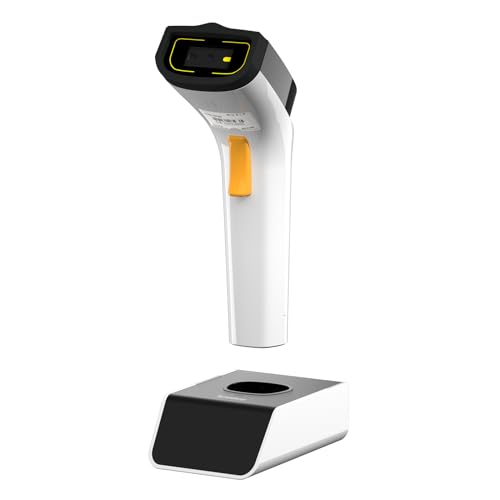
NetumScan Wi-Fi QR Barcode Scanner, Bluetooth Automatic 1D 2D Bar Code Scanner Supports TCP/UDP Network Protocols for Inventory, POS, Computer, Tablet, iPhone, iPad, Android
- Wi-Fi Network Connectivity: Supports TCP, UDP, MQTT, HTTP protocols
- Bluetooth Data Transfer: Compatible with Android, iOS, Windows, Mac OS
- Broad Barcode Compatibility: Reads 1D and 2D barcodes including QR, Data Matrix
As an affiliate, we earn on qualifying purchases.
As an affiliate, we earn on qualifying purchases.
Key Questions
Can QuadRF be used legally for surveillance?
Legal use of QuadRF depends on jurisdiction and context. Currently, specific regulations are still being developed, and unauthorized surveillance could violate privacy laws.
How effective is QuadRF at detecting drones and WiFi through walls?
Demonstrations suggest it is capable of detecting small drones and visualizing WiFi signals through various building materials, but effectiveness varies with environmental conditions and distances.
What are the privacy concerns associated with this technology?
The ability to see WiFi signals through walls and track drones raises concerns about unauthorized monitoring of private spaces and personal communications.
Who might deploy QuadRF in the future?
Potential users include security agencies, law enforcement, private security firms, and possibly commercial entities, depending on regulatory approval.
What regulations are in place for this kind of detection technology?
Regulations are still being discussed; current legal frameworks vary by country and may not specifically address RF-based detection systems like QuadRF.
Source: hn
Baby shower & registry season Picks
baby registry must-haves
As an affiliate, we earn on qualifying purchases.