TL;DR
BYD plans to become the world’s largest automaker within five years, targeting over 10 million annual sales by 2028. The company cites strong demand, new models, and battery innovations as key drivers.
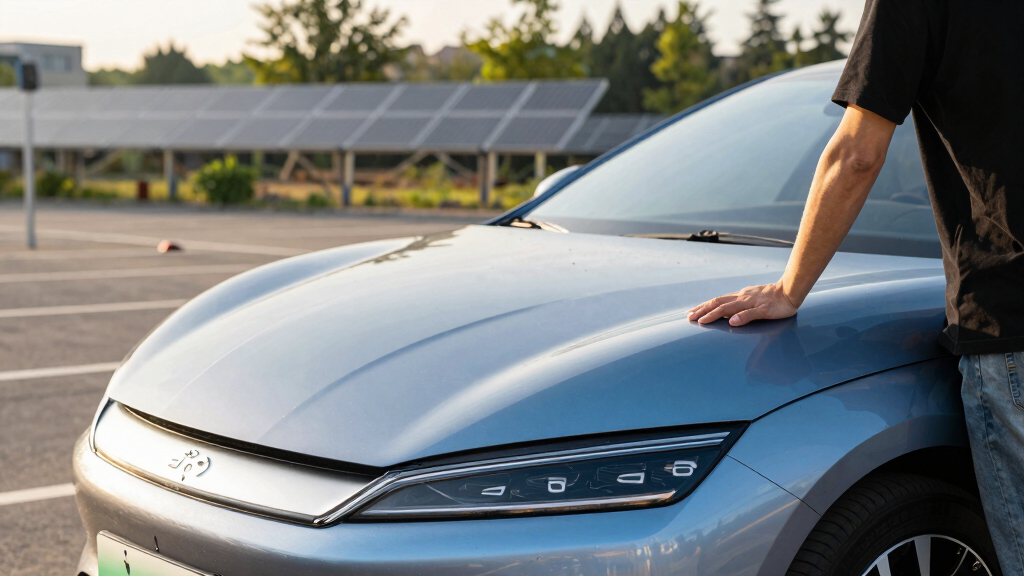
BYD Chairman Wang Chuanfu stated that the company aims to become the world’s largest automaker by volume within five years, projecting over 10 million units sold annually by 2028. This ambitious goal positions BYD to surpass current industry leaders and underscores its rapid expansion and technological advancements.
During a recent shareholder meeting, Wang Chuanfu detailed BYD’s strategy to achieve global leadership, including maintaining an average annual growth rate of 16.8%. The company expects to surpass Toyota’s current sales of approximately 11.3 million vehicles, assuming market conditions favor continued growth and no significant decline in competitors.
BYD is currently experiencing high demand, with executive vice president Stella Li noting demand is twice the company’s current production capacity, partly due to ramping up the new Blade Battery 2.0. The company faces a product transition phase that has temporarily suppressed sales in China, but new models like the Datang and upcoming Seal 08 are expected to boost future sales.
The company also plans to expand exports, with targets of 1.6 million overseas sales by 2026, supported by new battery technologies and localized manufacturing, including a factory in Hungary opening in Q4. Additionally, BYD aims to introduce new models tailored for international markets, such as a PHEV for Europe and a Kei car for Japan.
Implications of BYD’s Global Leadership Goal
BYD’s projected rise to the top of the global auto industry signifies a major shift in the electric vehicle market, especially as it leverages technological innovation and cost-effective mass production. Achieving this scale could challenge established automakers and accelerate the global EV transition, particularly in China and emerging markets.
This development matters to consumers, investors, and competitors because it signals increased competition, potential price reductions, and broader adoption of EVs worldwide. It also highlights the importance of battery technology and manufacturing capacity in shaping industry leadership.

Scale Diecast Metal Model Toy 1 18 for BYD ATTO 3 Alloy SUV Classic Model Car Collectible Display Piece for Display or Collectible
Design Concept: Each collectible alloy car model is meticulously crafted, using a precise 1:1 scale of the original…
As an affiliate, we earn on qualifying purchases.
As an affiliate, we earn on qualifying purchases.
BYD’s Rapid Growth and Technological Leadership
Founded in 1995, BYD has grown from a battery manufacturer into one of the largest EV producers globally. Its recent focus on vertical integration, including developing its own batteries, motors, and electronics, has enabled rapid scaling and cost reductions. The company has consistently invested in R&D, with over 120,000 engineers, and is pushing advancements in autonomous driving and battery tech, notably the second-generation Blade Battery.
Despite recent supply chain and product transition challenges, BYD’s strategic focus on innovation, local manufacturing, and international expansion has positioned it for significant growth. The company’s plans to ramp up battery production and introduce new models are part of its broader effort to capture more market share worldwide.
“Five years from now, BYD will be able to achieve true global leadership in terms of scale.”
— Wang Chuanfu

Batteries for Electric Vehicles: Materials and Electrochemistry
As an affiliate, we earn on qualifying purchases.
As an affiliate, we earn on qualifying purchases.
Uncertainties Surrounding BYD’s Growth Projections
While Wang Chuanfu’s projections are ambitious, they depend on several variables, including sustained demand, market conditions, and the company’s ability to scale battery and vehicle production. It is unclear how potential supply chain disruptions or competitive responses could impact these targets.
Additionally, the timeline for autonomous driving capabilities and the full impact of new battery technologies remains uncertain, as no specific implementation dates have been announced.

The 2011-2016 Outlook for Lithium-Ion Batteries for Plug-In Hybrid and Pure Electric Vehicles in Europe
As an affiliate, we earn on qualifying purchases.
As an affiliate, we earn on qualifying purchases.
Next Steps for BYD’s Market Expansion and Innovation
Over the coming months, BYD will focus on increasing production capacity, especially for its new Blade Battery 2.0, and launching new models like the Datang and Seal 08. The company will also expand its international manufacturing footprint, including the Hungary plant, to support overseas sales targets.
Further updates on autonomous driving deployment and battery technology commercialization are expected in the next year, alongside broader market entry strategies for Europe, Australia, Japan, and other regions.

Japan Mini Truck Kei Car Cab Over Compact 4wd Off Road Truck T-Shirt
JDM Japanese Mini Truck Kei Truck Japan Keijidosha Car Classic Mini Truck 4wd Off Road Kei Cab Over…
As an affiliate, we earn on qualifying purchases.
As an affiliate, we earn on qualifying purchases.
Key Questions
How realistic are BYD’s five-year growth projections?
While BYD has demonstrated rapid growth and technological innovation, achieving over 10 million units annually depends on market conditions, supply chain stability, and competitive responses. The projections are ambitious but reflect the company’s strategic confidence.
What are the main challenges BYD faces in reaching its goals?
Key challenges include scaling battery production, managing supply chain constraints, transitioning to new vehicle models, and maintaining technological leadership amid fierce global competition.
Will BYD’s focus on battery tech and autonomous driving significantly impact its growth?
Yes, advances in battery technology and autonomous driving are central to BYD’s strategy, enabling cost reductions, improved vehicle performance, and new market opportunities, which are critical for reaching its volume targets.
How will BYD’s international expansion influence global EV markets?
BYD’s entry into overseas markets with localized manufacturing and new models will likely increase competition, drive down prices, and accelerate EV adoption globally, especially in Europe and Asia.
What is the timeline for autonomous driving features to be implemented?
Wang Chuanfu indicated that L3 and L4 autonomous driving will be implemented ahead of schedule, but no specific dates have been provided. Details are still emerging.
Source: CleanTechnica