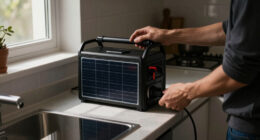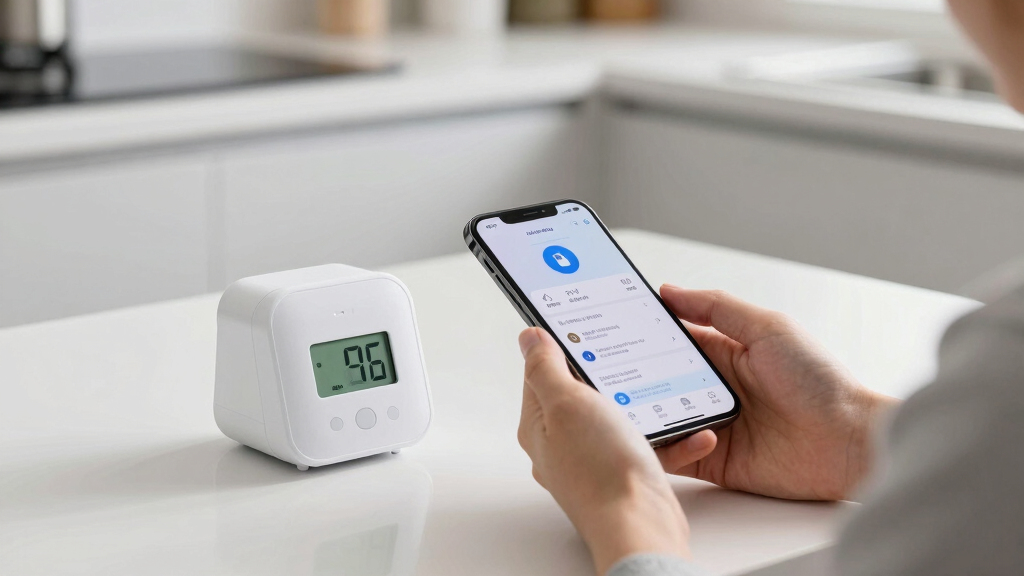
Finding the best freezer alarm with WiFi can significantly improve your food safety and peace of mind. The top pick, MOCREO WiFi Thermometer Freezer Alarm, stands out for its reliable remote alerts and easy app integration. GoveeLife WiFi Refrigerator Thermometer offers great value with its dual sensors, while the Unknown Product provides a premium experience with advanced features. The main challenge in this category is balancing cost, ease of use, and alert reliability. Keep reading to see how these options compare and which one suits your specific needs.
Listen free for 30 days with Audible
Thousands of audiobooks and originals — cancel anytime.
Start your free trialAs an affiliate, we earn on qualifying purchases.
Key Takeaways
- Top-performing products combine reliable WiFi alerts with user-friendly apps, making remote monitoring straightforward.
- Sensor accuracy and range vary, impacting how well you can track freezer conditions from a distance.
- Pricing ranges from budget-friendly to premium, with features like email alerts and data export often tied to higher cost.
- Most top picks include multiple sensors, which is essential for larger freezers or multiple compartments.
- Ease of setup and mobile app stability are common differentiators, with some products requiring more technical finesse.
| MOCREO WiFi Thermometer Freezer Alarm with Remote Sensors |  | Best Overall for Industrial-Grade Precision and Flexibility | Temperature Range: -40°F to 257°F | Accuracy: ±0.9°F | Connectivity: Wi-Fi (2.4GHz) | VIEW LATEST PRICE | See Our Full Breakdown |
| GoveeLife WiFi Refrigerator Thermometer with Alarm (2 Pack) |  | Best Value for Home Kitchen Monitoring | Temperature Range: -40°F to 158°F | Sensor Accuracy: ±0.9°F/±0.5°C | Response Time: 2 seconds | VIEW LATEST PRICE | See Our Full Breakdown |
| GoveeLife WiFi Refrigerator Thermometer with Alarm, Wireless Digital Freezer Temperature Gauge with App Control, LCD Display, 2 Years Free Data Export |  | Best for Long-Term Data Storage and App Control | Temperature Range: -40°F to 158°F | Accuracy: ±0.9°F | Connectivity: WiFi | VIEW LATEST PRICE | See Our Full Breakdown |
| MOCREO WiFi Freezer Thermometer Alarm with Digital Monitor, App & Email Alerts, 2 Sensors |  | Best Scalable Digital Hub with Multiple Alert Options | Temperature Range: -40°F to 221°F | Accuracy: ±0.9°F | Connectivity: Wi-Fi 2.4GHz | VIEW LATEST PRICE | See Our Full Breakdown |
| GoveeLife WiFi Refrigerator Thermometer (2 Pack) | 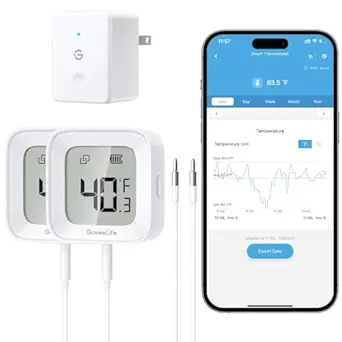 | Best Compact Pack for Manageable Home Monitoring | Temperature Range: -40°F to 158°F | Accuracy: ±0.9°F | Connectivity: 2.4GHz Wi-Fi | VIEW LATEST PRICE | See Our Full Breakdown |
| GoveeLife WiFi Refrigerator Thermometer with Alarm and App Control |  | Best for User-Friendly Remote Alerts and Multi-Sensor Support | Connectivity: Wi-Fi (2.4G only) | Temperature Range: -40°F to 158°F | Sensor Accuracy: ±0.9°F / ±0.5°C | VIEW LATEST PRICE | See Our Full Breakdown |
| MOCREO WiFi Remote Thermometer with Freezer Alarm, Long Range, Waterproof, App & Email Alerts, Digital Monitor Hub, 2 Sensors |  | Best for Long-Range and Outdoor Environments | Temperature Range: -4°F to 131°F | Accuracy: ±0.9°F | Wireless Range: Up to 1640 ft (1/3 mile) | VIEW LATEST PRICE | See Our Full Breakdown |
More Details on Our Top Picks
MOCREO WiFi Thermometer Freezer Alarm with Remote Sensors
This option stands out for its industrial-grade accuracy and highly expandable sensor system, making it suitable for large-scale or commercial use. Compared with the GoveeLife WiFi Refrigerator Thermometer, it offers more sensors and longer battery life, but the setup can be complex, and it requires a Wi-Fi connection in the 2.4GHz band. Its ability to export data in CSV format and support up to 30 sensors makes it ideal for those needing detailed monitoring across multiple units or environments. The tradeoff is that this device is less user-friendly for casual users and is primarily designed for those comfortable with more intricate setups.
Pros:- High accuracy suitable for demanding environments
- Expandable sensor system supports large coverage
- Data export feature for detailed record-keeping
- Long battery life with low maintenance
Cons:- Requires Wi-Fi connection in the 2.4GHz band, limiting compatibility
- Complex setup process may intimidate casual users
Best for: Large-scale operations or users needing comprehensive, customizable monitoring with industrial-grade accuracy
Not ideal for: Home users seeking a simple, plug-and-play solution without extensive setup or multiple sensors
- Temperature Range:-40°F to 257°F
- Accuracy:±0.9°F
- Connectivity:Wi-Fi (2.4GHz)
- Sensor Type:Wireless temperature sensors
- Battery Life:Up to 2 years
- Number of Sensors:2 included, expandable to 30
Bottom line: This is best suited for professionals or large facilities that need reliable, scalable temperature monitoring with detailed data capabilities.
GoveeLife WiFi Refrigerator Thermometer with Alarm (2 Pack)
This pick makes the most sense for home cooks or small commercial setups needing reliable remote monitoring at an accessible price point. It provides quick, real-time alerts via app, email, or a buzzer, with a simple magnetic or hanging installation, making it user-friendly compared to more complex systems like the MOCREO WiFi Thermometer. While it covers a decent range of up to 230ft and responds in 2 seconds, it only supports 2.4G Wi-Fi networks, limiting connectivity options. The buzzer alarm also requires manual reset, which might be a minor inconvenience. Compared to the GoveeLife WiFi Refrigerator Thermometer with Alarm, this pack emphasizes ease of setup and affordability but lacks advanced data export features.
Pros:- Easy to install with magnetic or hanging design
- Fast response time with high-precision sensors
- Multiple alert options including app and buzzer
- Affordable for multiple sensors
Cons:- Limited support to 2.4G Wi-Fi networks
- Buzzer alarm needs manual reset after activation
Best for: Homeowners or small business owners who want quick setup and reliable alerts without complex configurations
Not ideal for: Large operations or users needing extensive data export and sensor scalability
- Temperature Range:-40°F to 158°F
- Sensor Accuracy:±0.9°F/±0.5°C
- Response Time:2 seconds
- Connectivity:2.4G Wi-Fi
- Range:Up to 230ft
- Alarm Volume:80dB
Bottom line: Ideal for homeowners seeking a straightforward, budget-friendly way to monitor freezer and refrigerator temperatures remotely.
GoveeLife WiFi Refrigerator Thermometer with Alarm, Wireless Digital Freezer Temperature Gauge with App Control, LCD Display, 2 Years Free Data Export
This device shines for its longitudinal data storage and a clear LCD display, making it ideal for users who want ongoing recordkeeping combined with remote alerts. It offers a fast 2-second response time and supports up to 10 sensors with a gateway, giving it an edge over simpler models like the GoveeLife 2 Pack. However, it requires a gateway for remote alarms, which adds to setup complexity and cost. Unlike the more basic models, it emphasizes data export capabilities and detailed monitoring, but it’s limited to specific sensor types and indoor use. It’s better suited to those who prioritize tracking over instant audible alarms.
Pros:- Supports up to 10 sensors with gateway
- 2 years of free data export and storage
- Fast response and high accuracy
- Flexible placement with magnet and lanyard
Cons:- Requires a gateway for remote alerts
- Limited sensor compatibility and indoor use only
Best for: Food safety-conscious users who need detailed long-term data and app control for multiple sensors
Not ideal for: Casual users who prefer plug-and-play or do without additional gateways
- Temperature Range:-40°F to 158°F
- Accuracy:±0.9°F
- Connectivity:WiFi
- Display:LCD
- Response Time:2 seconds
- Data Storage:2 years free
Bottom line: Best for users needing extensive data tracking and long-term monitoring at a higher setup complexity.
MOCREO WiFi Freezer Thermometer Alarm with Digital Monitor, App & Email Alerts, 2 Sensors
This pick is ideal for users who want scalable coverage and a central digital hub. Its accurate temperature measurement with industrial-grade sensors and a clear LCD hub display makes it easy to monitor multiple zones simultaneously. The device offers app, email, and loud alarms, providing multiple ways to stay informed. Compared with the GoveeLife WiFi Refrigerator Thermometer, it offers more extensive sensor support and data export options. However, setup can be complex, especially for non-technical users, and an external probe is needed for different measurement points. The long battery life and digital hub make it suitable for those managing multiple freezers or commercial operations.
Pros:- Supports up to 30 sensors with multiple hubs
- Accurate measurement with industrial-grade sensors
- Multiple alert options including app, email, and loud alarms
- Long battery life up to 2 years
Cons:- Setup complexity can be daunting for non-technical users
- External probe not included, may require additional purchase
Best for: Commercial operators or large households needing multiple sensors and a centralized monitoring system
Not ideal for: Casual home users or those seeking a simple, all-in-one solution without extensive configuration
- Temperature Range:-40°F to 221°F
- Accuracy:±0.9°F
- Connectivity:Wi-Fi 2.4GHz
- Sensor Type:DS18B20 chip
- Battery Life:Up to 2 years
- Number of Sensors:2 included, expandable to 30
Bottom line: Perfect for large-scale or professional setups that need detailed, scalable, and multi-channel monitoring.
GoveeLife WiFi Refrigerator Thermometer (2 Pack)
This bundle makes sense for those who need reliable, real-time temperature data in a compact form. It provides accurate measurements with fast refresh rates and supports remote monitoring via app, with data export capabilities for long-term tracking. Its magnetic and lanyard options allow flexible placement, and the 2-year free data storage makes it suitable for ongoing recordkeeping. Compared to larger, more complex systems like the MOCREO model, this pack emphasizes simplicity and affordability, but it doesn’t support alarms outside the app, which could be a drawback for those relying on audible alerts. It’s best for users who want straightforward, effective monitoring without extra bells and whistles.
Pros:- Reliable, real-time temperature updates
- Easy to install with magnetic or lanyard options
- Long-term data storage for 2 years
- Affordable and compact
Cons:- No in-app audible alarms, relies on notifications only
- Limited to 2.4GHz Wi-Fi networks
Best for: Home users or small businesses needing a simple, reliable monitoring solution with data export
Not ideal for: Large-scale or industrial users requiring multiple sensors or audible alarms
- Temperature Range:-40°F to 158°F
- Accuracy:±0.9°F
- Connectivity:2.4GHz Wi-Fi
- Data Storage:2 years
- Monitoring Distance:Up to 197 ft
- Sensor Type:Slim probes
Bottom line: Best suited for users who want dependable, straightforward monitoring without complex setup or extensive data needs.
GoveeLife WiFi Refrigerator Thermometer with Alarm and App Control
This GoveeLife model makes a strong case for those who want real-time temperature alerts via an app, standing out with its easy installation and multi-sensor support. Compared to the MOCREO, it offers a simpler setup with instant notifications, though it only supports 2.4G Wi-Fi networks, which could limit connectivity in some homes. Its high-precision sensor and fast response time ensure reliable readings, but the alarm requires manual reset, which might be inconvenient during emergencies. Its lack of waterproofing is a drawback for outdoor or humid environments, unlike the MOCREO. Overall, it suits users prioritizing ease of use and quick alerts over advanced long-range features.
Pros:- Simple app control with instant alerts
- Supports multiple sensors
- Easy to install with magnetic/hanging design
- High-precision sensor
Cons:- Limited to 2.4G Wi-Fi networks
- Alarm requires manual reset
- No waterproof rating
Best for: Homeowners who want straightforward, app-based temperature alerts for refrigerators and freezers.
Not ideal for: Users needing long-range monitoring or outdoor waterproof sensors, as its range and waterproof features are limited.
- Connectivity:Wi-Fi (2.4G only)
- Temperature Range:-40°F to 158°F
- Sensor Accuracy:±0.9°F / ±0.5°C
- Response Time:2 seconds
- Alarm Volume:80dB
- Range:Up to 230ft (70m)
Bottom line: This pick is ideal for everyday home use where ease and speed of alerts matter most.
MOCREO WiFi Remote Thermometer with Freezer Alarm, Long Range, Waterproof, App & Email Alerts, Digital Monitor Hub, 2 Sensors
The MOCREO model excels in environments that demand long-distance monitoring, boasting a wireless range up to 1/3 mile and waterproof sensors. Unlike the GoveeLife, it supports Ethernet connectivity and is suitable for outdoor use, greenhouses, or RVs. Its accuracy of ±0.9°F and multiple alert options provide peace of mind for critical applications. However, its placement can be tricky inside metal enclosures, and battery replacements are necessary every two years, which might be inconvenient. While it offers extensive range and outdoor durability, its setup complexity and need for Wi-Fi or Ethernet might be overkill for simple indoor use.
Pros:- Long wireless range up to 1/3 mile
- Waterproof sensors suitable for outdoor use
- Accurate temperature measurement
- Multiple alert options via app and email
Cons:- Placement limitations inside metal enclosures
- Battery replacement needed every 2 years
- Setup can be more complex due to Ethernet option
Best for: Outdoor enthusiasts, greenhouse growers, or RV owners needing reliable, long-range temperature monitoring.
Not ideal for: Indoors-only users who don’t require extensive range or waterproof features, as it’s more complex and costlier than simpler models.
- Temperature Range:-4°F to 131°F
- Accuracy:±0.9°F
- Wireless Range:Up to 1640 ft (1/3 mile)
- Power Source:3 AAA batteries (included)
- Waterproof Rating:IP66
- Connectivity:Wi-Fi, Ethernet
Bottom line: This device is best for users who need robust, outdoor-capable, long-range temperature monitoring and are comfortable with a more involved setup process.
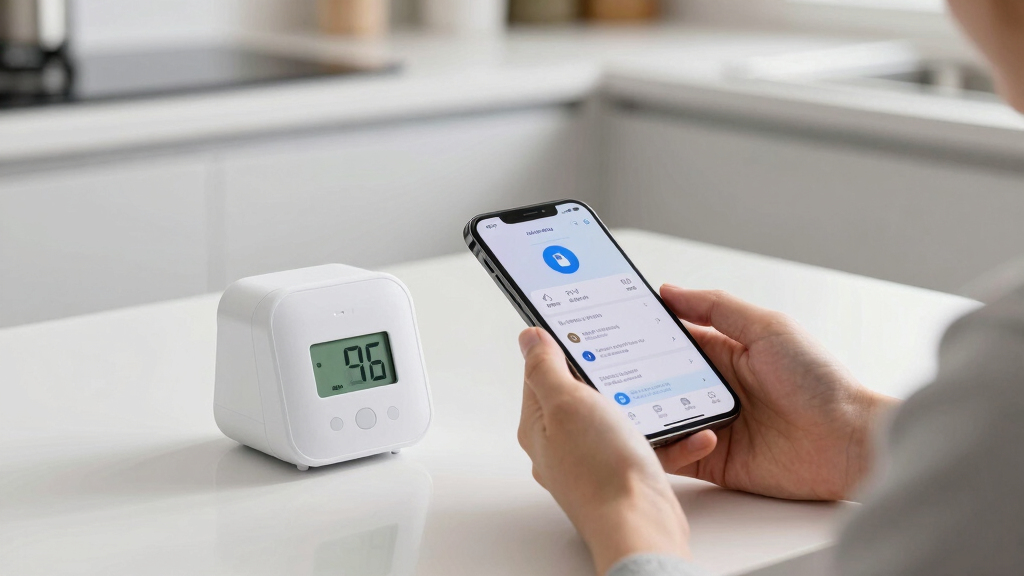
How We Picked
Products were evaluated based on their connectivity reliability, alert accuracy, ease of use, build quality, and value for money. We prioritized models with stable WiFi connections, clear alert systems, and comprehensive app controls. The ranking reflects the overall balance of performance, user experience, and cost, with top choices offering the most dependable monitoring solutions for various budgets and technical skills.Factors to Consider When Choosing Best Freezer Alarm With WiFi
Choosing the best freezer alarm with WiFi involves understanding several key factors that influence daily usability and long-term reliability. Not all alarms are created equal; some excel in connectivity but lack sensor accuracy, while others may be budget-friendly but difficult to set up. Considering these factors helps ensure you select a device that truly meets your monitoring needs and provides peace of mind.Connectivity and App Reliability
Reliable WiFi connectivity is fundamental for remote alerts. Look for products with positive user reviews on app stability and minimal lag or disconnections. Some devices rely on cloud servers, which can introduce delays or outages, so reading user feedback on real-world performance is crucial. The ease of pairing the device and maintaining a stable connection should influence your choice, especially if you depend on timely alerts for large or critical freezer contents.
Sensor Accuracy and Range
Accurate temperature readings are essential for effective monitoring. Pay attention to sensor placement options and reported accuracy levels. Longer-range sensors benefit larger freezers or multiple compartments, but sometimes trade off with ease of setup or battery life. Remember, even the most feature-rich alarm is useless if it provides unreliable data, so prioritize models with proven accuracy and good sensor coverage.
Ease of Setup and User Interface
An alarm that’s complicated to install or operate can lead to frustration and missed alerts. User-friendly apps with step-by-step guides and clear notifications are preferable. Some products offer extensive customization, which can be valuable but overwhelming for beginners. Consider your comfort level with technology and choose a model that matches your experience, avoiding overly complex systems if simplicity is your priority.
Additional Features and Data Management
Extra features like email alerts, data export, or integration with smart home systems can add value. These functions are particularly useful for business environments or for those who want detailed tracking over time. However, they often come at a higher cost or increased setup complexity. Decide whether these extras align with your needs or if a basic alert system suffices.
Price and Overall Value
Price varies widely, with budget options offering core functionality and premium models providing advanced features. A higher cost doesn’t always guarantee better reliability, so compare the core performance aspects carefully. Consider long-term value: investing in a more dependable system may save money and stress in the long run, especially if you store valuable or perishable goods.
Frequently Asked Questions
How accurate are WiFi freezer alarms compared to traditional thermometers?
WiFi freezer alarms generally offer comparable accuracy to traditional digital thermometers, provided they are high quality and properly calibrated. The main advantage is remote monitoring, not precision alone. Some cheaper models may sacrifice sensor accuracy for lower price points, so it’s important to read reviews and specifications. For critical storage, choosing a device with verified accuracy and consistent readings ensures your food stays at safe temperatures.
Can WiFi freezer alarms work without WiFi at home?
Most WiFi-enabled alarms depend on an active internet connection to send alerts and update data. Without WiFi, the alarm might still monitor temperature locally, but remote notifications will fail. Some models include fallback options like local alarms or Bluetooth, but these are less common. To rely solely on WiFi, ensure your home network is stable and that the device can operate offline temporarily if needed.
Are there battery life concerns with WiFi freezer alarms?
Battery life varies based on sensor type, WiFi module, and usage frequency. Devices with frequent alerts or extensive data logging can drain batteries faster, requiring regular replacement or recharging. Some models include power-saving modes or low-battery alerts to prevent unexpected failures. Consider your monitoring frequency and choose a device with a battery life that matches your needs, especially if you prefer less maintenance.
How difficult is it to set up these WiFi freezer alarms?
Setup difficulty ranges from plug-and-play to more complex configurations requiring app permissions and WiFi network adjustments. Many products now feature guided setup processes and clear instructions, making initial installation straightforward for most users. However, some advanced systems with multiple sensors or integrations might require a tech-savvy approach. If you prefer simplicity, look for models praised for quick installation and minimal fuss.
Is it worth paying extra for a model with data export or smart home integration?
If you need detailed temperature logs for compliance or want to integrate alerts into a broader smart home system, paying more for these features can be worthwhile. Data export helps analyze historical temperature trends, while smart integrations can trigger other devices or routines. For basic home use, these extras might be unnecessary, and a simpler model will do. Assess your specific needs and budget before opting for higher-end models with these capabilities.
Conclusion
For most home users, the MOCREO WiFi Thermometer Freezer Alarm strikes a balance between reliability and ease of use, making it the best overall pick. Budget-conscious buyers should consider the GoveeLife WiFi Thermometer (2 Pack), which offers solid performance without breaking the bank. Those with larger freezers or seeking advanced features might prefer the Unknown Product for its premium build and data capabilities. Beginners will appreciate devices with simple setup, while professionals handling sensitive storage should prioritize models with higher accuracy and data export options. Your choice depends on your specific storage needs, tech comfort level, and budget.
Back to school Picks
back to school
As an affiliate, we earn on qualifying purchases.