To get the most energy from your solar panels, you should regularly adjust their position to follow the sun’s path. If you prefer manual control, use simple tools like a protractor to tilt and rotate the panels at the start of each day or season. For more convenience and efficiency, automated tracking systems can automatically move the panels throughout the day, ensuring maximum sunlight exposure. Continue exploring to discover the best methods for your setup.
Open a free Amazon Business account
Business pricing, bulk buying and tax-exempt orders.
As an affiliate, we earn on qualifying purchases.
Key Takeaways
- Use automated solar tracking systems for precise, hands-free adjustment aligned with the sun’s path throughout the day.
- Manually adjust panels at dawn and dusk using simple tools like a protractor or inclinometer for seasonal changes.
- Monitor seasonal sunlight patterns and weather conditions to determine optimal tilt and orientation adjustments.
- Incorporate AI-powered tracking for enhanced optimization and real-time response to changing sunlight.
- Regularly inspect and fine-tune manual or automated systems to maintain maximum energy absorption.
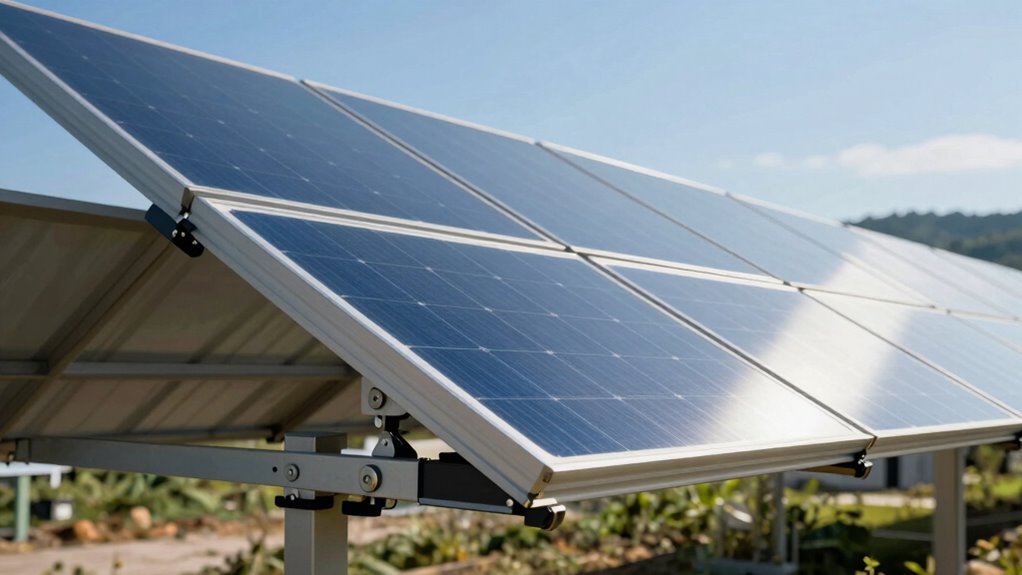
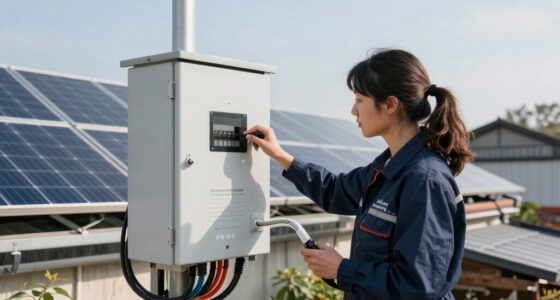
As the sun moves across the sky, your solar panels need to adjust to maximize energy absorption. This continuous movement ensures that your panels face the sun directly, capturing the maximum amount of sunlight possible. To achieve this, many solar setups incorporate tracking systems, which automatically follow the sun’s path throughout the day. These systems are designed to optimize panel positioning without requiring your constant input, making them a popular choice for those seeking efficiency and convenience. With tracking systems, your panels tilt and rotate as needed, maintaining an optimal angle regardless of the time or season. They’re especially useful in large installations or areas with variable sunlight, as they significantly increase energy output compared to fixed-position panels. Additionally, understanding the sun’s movement pattern can help you better plan manual adjustments and improve overall energy collection. Recognizing the seasonal variation in sunlight can further enhance your adjustment strategies. Properly monitoring solar angles can also improve your understanding of how your panels perform throughout the year. Being aware of solar tracking technology can help you decide whether an automated system aligns with your energy goals.
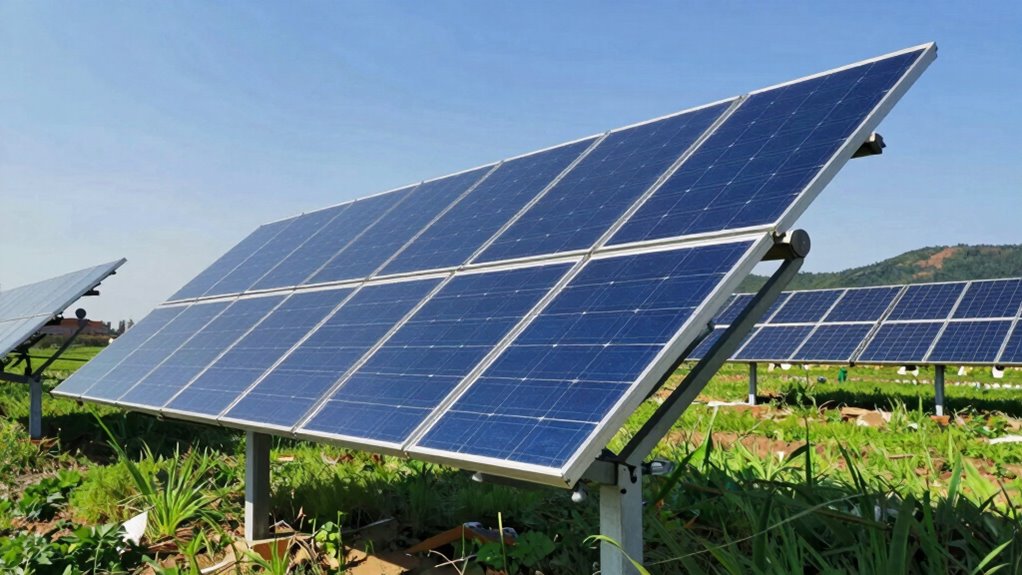
Tracking systems automatically adjust solar panels for maximum sunlight throughout the day.
Furthermore, some advanced tracking systems utilize artificial intelligence to optimize movement and adapt to weather conditions, further boosting efficiency. However, not everyone opts for automatic tracking systems. Some prefer or rely on manual adjustment, especially if they have a smaller system or want to control their setup more closely. Manual adjustment involves physically changing the angle of your panels at the start of the day or as sunlight conditions change. This process might seem cumbersome, but it allows you to fine-tune your panels’ position based on weather forecasts or seasonal shifts. With manual adjustment, you should aim to tilt your panels toward the sun’s current position, which varies throughout the year. It’s a straightforward method, but it requires you to stay attentive and make adjustments regularly, especially during the peak sunlight hours.
If you choose to go with manual adjustment, it’s best to establish a routine—perhaps adjusting your panels in the morning and late afternoon. You’ll need to understand the sun’s trajectory in your location and how it shifts seasonally. Using simple tools like a protractor or an inclinometer can help you set your panels at the correct angles. While manual adjustment doesn’t offer the same convenience as tracking systems, it can be cost-effective and sufficient for small-scale solar setups or temporary installations.
In the end, whether you opt for advanced tracking systems or prefer manual adjustments, the goal remains the same: ensuring your solar panels always face the sun to maximize energy absorption. Automating this process with tracking systems reduces effort and increases efficiency, especially in large or commercial installations. But if you’re committed to regular maintenance and adjustment, manual methods can still deliver solid results. Whichever approach you choose, being attentive to sunlight patterns and adjusting accordingly will help you get the most out of your solar investment.
solar panel automatic tracking system
As an affiliate, we earn on qualifying purchases.
As an affiliate, we earn on qualifying purchases.
Frequently Asked Questions
How Often Should Solar Panels Be Rotated for Optimal Efficiency?
You should rotate your solar panels every few months to maintain ideal efficiency, especially after seasonal changes. Regular panel cleaning removes dirt and dust that can reduce output, while shading analysis helps identify new obstructions. By staying proactive with these practices, you guarantee your panels capture maximum sunlight. Adjusting their angle or position according to seasonal sunlight angles also boosts performance, making your system more effective year-round.
Can Manual Rotation Damage Solar Panel Mounts or Hardware?
Manual rotation can potentially cause mount damage or hardware safety issues if you’re not careful. If you apply excessive force or don’t follow manufacturer instructions, you risk loosening or damaging the mounting system. To keep your panels secure and functioning well, handle them gently and regularly inspect the hardware. Properly maintaining your system guarantees safe, efficient rotation without risking mount damage or hardware failure.
What Tools Are Needed for Rotating Solar Panels Safely?
To rotate your solar panels safely, you’ll need tools like a wrench or socket set for tilt adjustments and panel alignment. A level helps guarantee proper positioning, preventing damage to mounts or hardware. Use gloves for grip and protection, and a ladder if panels are elevated. Always double-check your adjustments to maintain ideal sunlight exposure, avoiding unnecessary strain on the mounting system and ensuring maximum efficiency.
How Does Seasonal Variation Affect Panel Rotation Strategies?
Seasonal variation greatly impacts your panel rotation strategy, as the sun’s angle changes throughout the year. By adjusting panels seasonally, you maximize energy output, reducing environmental impact and enhancing long-term durability. You should plan for more frequent adjustments during equinoxes and solstices to optimize sunlight capture. Consistently rotating panels according to seasonal shifts helps maintain efficiency, prolongs their lifespan, and minimizes environmental strain caused by inefficient energy production.
Are Automatic Tracking Systems Cost-Effective for Residential Use?
Automatic tracking systems are often cost-effective for residential use if you want to maximize energy output. They reduce the need for manual adjustments and guarantee your panels follow the sun’s movement. When doing a cost comparison, consider installation and maintenance costs against the increased efficiency and energy savings. If your location has significant seasonal or daily sunlight variation, investing in an automatic system can pay off over time.
manual solar panel tilt adjustment tool
As an affiliate, we earn on qualifying purchases.
As an affiliate, we earn on qualifying purchases.
Conclusion
By regularly adjusting your solar panels to follow the sun, you’ll maximize their efficiency and get the most out of your investment. Using simple tracking methods or automatic systems can make this task easier and more effective. Remember, if you want your solar setup to truly shine, you’ve got to stay one step ahead and keep things moving. After all, a rising tide lifts all boats—so stay proactive, and your panels will reward you with steady energy and savings.
As an affiliate, we earn on qualifying purchases.
As an affiliate, we earn on qualifying purchases.
NFL season / tailgating Picks
team gear
As an affiliate, we earn on qualifying purchases.