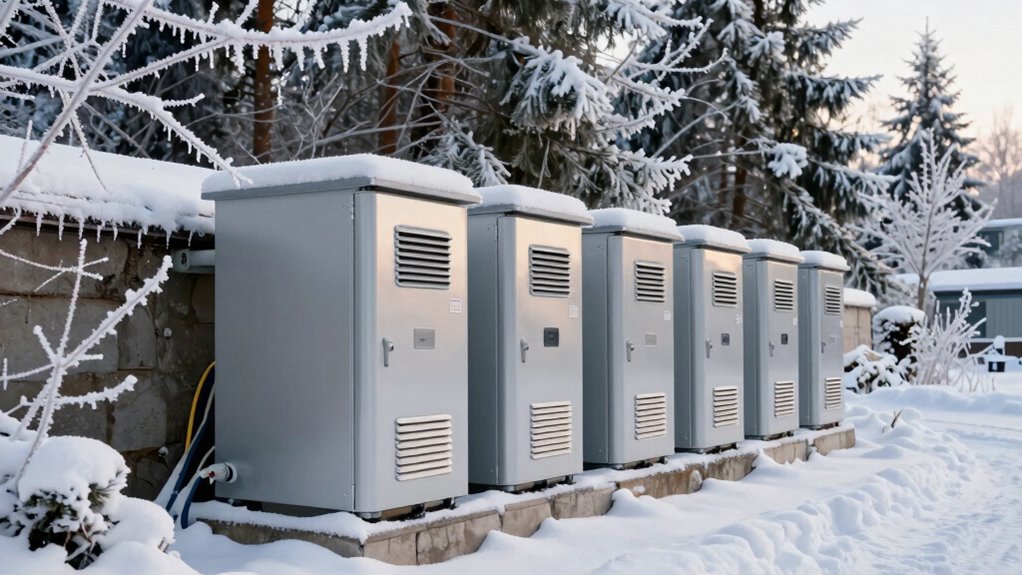
To keep your battery backup system ready for sudden winter outages, regularly inspect and clean the batteries, checking for corrosion, leaks, and tight connections. Monitor performance with reliable devices, perform full discharge and recharge cycles, and keep detailed records. Store batteries in temperature-controlled environments and use renewable sources like solar panels to supplement charging. Consistent maintenance and testing can prevent surprises—continue exploring for more tips to guarantee your system stays resilient through winter storms.

Get backup power and energy gear delivered free with Prime
- Fast, free delivery on millions of items
- Prime Video, Amazon Music and more included
- Member-only deals all year
Key Takeaways
- Regularly inspect and clean batteries, terminals, and connections to prevent corrosion and ensure optimal performance.
- Conduct periodic discharge and recharge cycles to verify system readiness and identify potential issues early.
- Store batteries in temperature-controlled environments to prevent deterioration from cold or heat.
- Integrate renewable energy sources like solar panels to maintain charge during winter days and cloudy periods.
- Maintain detailed records of system performance and perform routine maintenance to ensure reliability before outages.
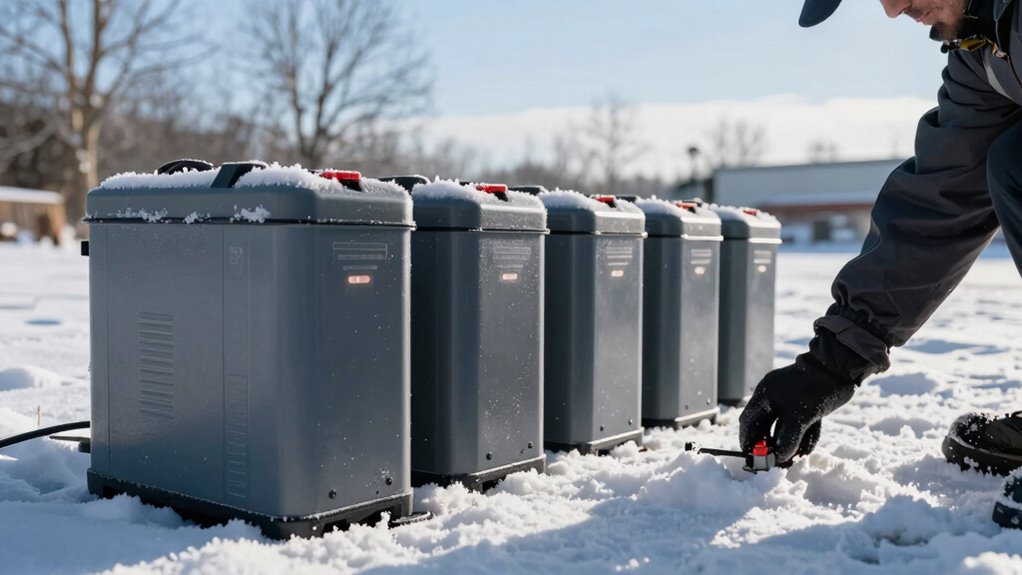
Winter outages can strike unexpectedly, leaving your home or business vulnerable without power. When the cold weather hits, having a reliable battery backup system becomes essential to keep your lights on, your food fresh, and your operations running smoothly. To guarantee your system is prepared, you need to focus on proper battery maintenance and consider integrating renewable energy sources into your setup. These steps will help you stay resilient during winter storms and power outages.
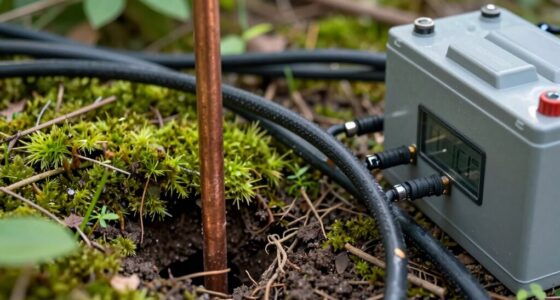
Start by regularly inspecting your batteries. Cold temperatures can affect their performance, so it’s crucial to check for corrosion, leaks, or any signs of damage. Clean terminals and guarantee connections are tight. Keep your batteries charged, as a low charge can diminish their capacity and lifespan, especially in freezing weather. If your system uses lead-acid batteries, remember they require periodic topping off with distilled water—never tap water—because mineral deposits can impair their functionality. For lithium-ion batteries, guarantee they’re within the recommended temperature range to prevent capacity loss. Additionally, understanding the impact of biodiversity on environmental stability can help you appreciate the importance of resilient energy systems in sustainable living.
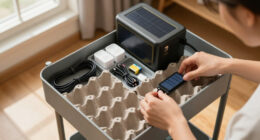
Battery maintenance isn’t just about physical upkeep; it also involves monitoring your system’s performance. Use a reliable monitoring device to track voltage levels, charge cycles, and overall health. Staying on top of these metrics helps you identify potential issues before they become critical, especially when you need your backup system most during winter outages. Additionally, keep your batteries stored in a location that’s temperature-controlled if possible, as extreme cold or heat accelerates deterioration. Proper storage guarantees your batteries retain their capacity longer and are ready when you need them. Regular testing, including discharge cycles, can help verify that your batteries are functioning properly under real-world conditions. Incorporating performance metrics into your maintenance routine can further optimize your system’s reliability.
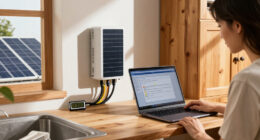
Integrating renewable energy sources like solar panels can considerably enhance your backup system’s reliability. During winter, sunlight may be limited, but solar panels can still generate power on cloudy days, helping to recharge your batteries and reduce dependence on grid power. Properly sizing your renewable energy components guarantees continuous charging, even in shorter daylight hours. Pairing renewable energy with your battery backup system creates a more sustainable and resilient setup, capable of weathering winter storms more effectively.
In addition to maintenance, consider testing your entire backup system periodically. Run full discharge and recharge cycles to verify that your batteries and renewable energy components work as intended. This proactive approach guarantees your system is in top shape before winter storms hit, giving you peace of mind. By staying diligent with battery maintenance, regularly inspecting your system, and leveraging renewable energy, you can keep your battery backup system ready for any sudden winter outage.
battery backup system inspection kit
As an affiliate, we earn on qualifying purchases.
As an affiliate, we earn on qualifying purchases.
Frequently Asked Questions
How Often Should I Test My Battery Backup System During Winter?
You should test your battery backup system at least once a month during winter to guarantee peak performance. Regular testing helps monitor the battery’s lifespan and catch any issues early. Keep in mind that colder temperatures can affect battery efficiency, so more frequent testing might be necessary if you notice performance drops. Consistent testing ensures your system remains reliable, ready to protect you during sudden outages.
Can Cold Temperatures Damage My Battery Backup System?
Cold temperatures can damage your battery backup system if you don’t take precautions. Extreme cold can reduce battery efficiency and cause internal damage. To prevent this, you should use battery insulation and store batteries in cold storage environments when possible. Keeping your system insulated helps maintain ideal temperature, ensuring it functions properly during winter outages. Regularly checking and maintaining your batteries also helps avoid cold-related damage and prolongs their lifespan.
What Are Signs My Battery Backup Needs Replacement?
Your battery backup system is whispering for help when its power capacity diminishes or its lifespan nears the end. Watch for signs like longer charging times, reduced runtime, or frequent shutdowns. If you notice these, it’s like your system is running on empty, signaling it’s time for a replacement. Staying alert to these cues guarantees your backup remains a strong shield against winter outages, keeping your home safe and powered.
Is Professional Maintenance Necessary for Winter Readiness?
Yes, professional maintenance is essential for winter readiness. Regular check-ups help you monitor your battery lifespan and guarantee the system functions properly during outages. While maintenance costs might seem like an expense, they prevent costly repairs or replacements later. A technician can identify issues early, optimize performance, and extend your backup system’s life, giving you peace of mind during harsh winter conditions and ensuring you’re prepared when power outages strike.
How Do I Ensure Backup System Compatibility With New Appliances?
To guarantee your backup system is compatible with new appliances, start by checking their power requirements and matching them with your system’s capacity. Focus on appliance compatibility by reviewing wattage and voltage specs. For smooth system integration, consult your backup system’s manual or a professional to verify that your new appliances will work seamlessly with existing setups. Regularly update your system’s firmware to maintain ideal compatibility and performance.
solar panel for home backup power
As an affiliate, we earn on qualifying purchases.
As an affiliate, we earn on qualifying purchases.
Conclusion
To guarantee your battery backup system is ready for winter outages, regularly test and maintain it, especially before storms hit. Imagine a homeowner in Vermont losing power during a snowstorm; thanks to a well-maintained backup system, they kept their heater running and avoided freezing conditions. Stay proactive—check your batteries, keep them charged, and have a plan in place. Being prepared means peace of mind when winter’s worst arrives.
lead-acid battery maintenance kit
As an affiliate, we earn on qualifying purchases.
As an affiliate, we earn on qualifying purchases.
battery monitor device for home backup
As an affiliate, we earn on qualifying purchases.
As an affiliate, we earn on qualifying purchases.
Halloween Picks
halloween
As an affiliate, we earn on qualifying purchases.