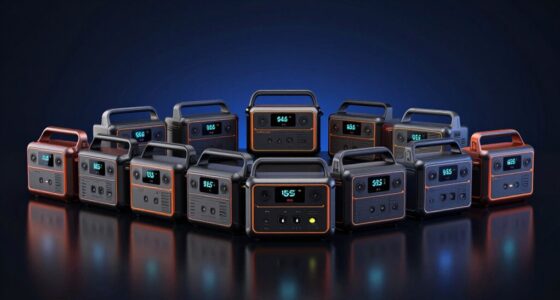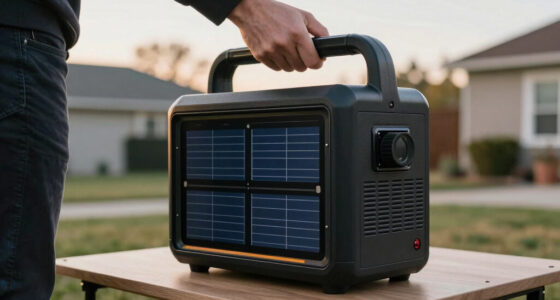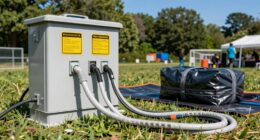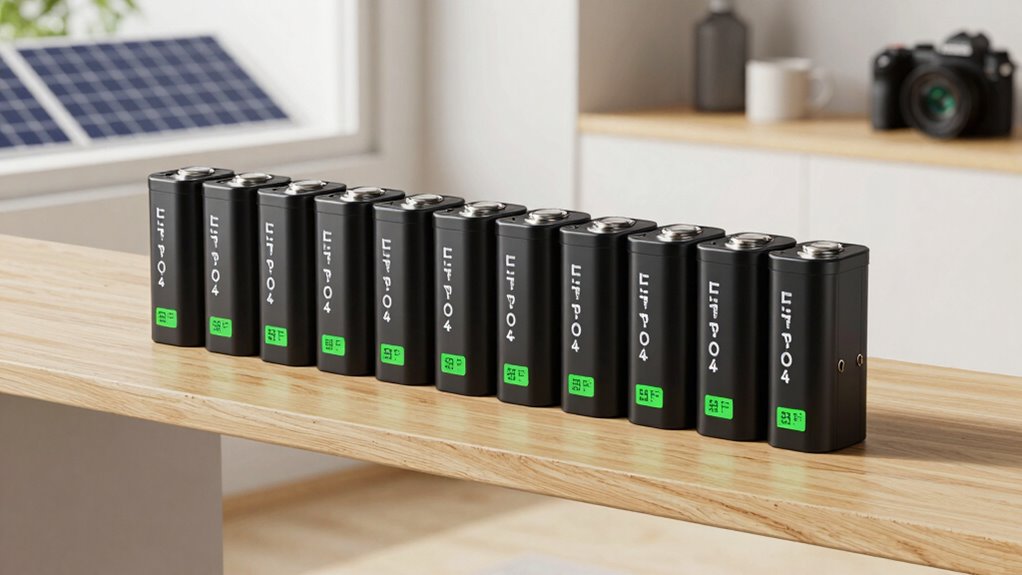
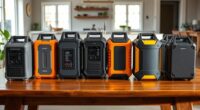
When selecting a lifepo4 battery for home backup, the goal is to find a reliable, long-lasting power source that can handle emergency outages and daily needs. The Jackery Explorer 2000 v2 stands out as the best overall pick thanks to its high capacity and portability. For those prioritizing capacity and expandability, the PECRON F3000LFP offers impressive storage and fast charging, making it ideal for larger homes. A key tradeoff in this category is balancing upfront cost with long-term performance and capacity, especially since larger batteries often come with higher prices and installation considerations. Continue reading for a detailed comparison of these options and more to find the best fit for your home backup needs.

Key Takeaways
- Capacity and expandability are critical for future-proofing home backup systems, with larger batteries offering more resilience during outages.
- Portability varies; some batteries are portable power stations suited for emergencies and outdoor use, while others are fixed installations.
- Fast charging and solar compatibility significantly enhance usability, especially for off-grid or grid-tied backup systems.
- Build quality and safety features like BMS influence longevity and reliability, making them essential factors.
- Price-to-capacity ratio varies; high-capacity batteries tend to cost more but can save money long-term by reducing replacement frequency.


| lifepo4 battery for home backup | Capacity |
|---|---|
| Jackery Explorer 2000 v2 Porta | 2042Wh |
| PECRON Portable Power Station | 3072Wh |
| Jackery Explorer 1000 v2 Porta | 1070Wh |
| 12V 200Ah LiFePO4 Battery | 200Ah |
| ECO-WORTHY Cubix100 48V 100Ah | — |
| EF ECOFLOW Portable Power Stat | — |
| EF ECOFLOW Portable Power Stat | — |
| Anker SOLIX C1000 Portable Pow | — |
More Details on Our Top Picks
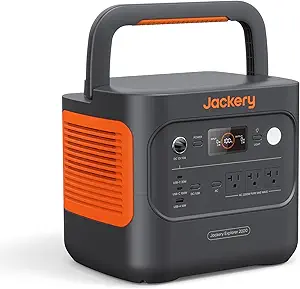
Jackery Explorer 2000 v2 Portable Power Station, 2042Wh LiFePO4 Battery, 2200W Solar Generator, USB-C PD 100W Fast Charging
This model stands out primarily because of its impressive 2042Wh capacity combined with a lightweight design, making it ideal for users who need reliable power on the go or during emergencies. Compared with the larger PECRON F3000LFP, the Jackery Explorer 2000 v2 offers easier portability, though it sacrifices some scalability and raw power. Its fast charging and solar compatibility mean it can be recharged quickly or sustainably, but the high price and weight (39.5 lbs) might be drawbacks for those seeking a more budget-friendly or ultra-light solution. This pick makes the most sense for individuals who want a balance of capacity, portability, and longevity without needing the extensive expandability of larger systems.
Pros:- Large 2042Wh capacity suitable for emergencies and outdoor use
- Lightweight and compact compared to larger stationary options
- Fast charging and solar compatibility for flexible recharging
- Long lifespan of up to 10 years with LiFePO4 technology
Cons:- Relatively high price point may be a barrier
- Weight of nearly 40 lbs reduces portability for some users
- Requires optional solar panels for optimal solar charging
Best for: Families or outdoor enthusiasts needing portable backup power with long-term durability.
Not ideal for: Homeowners seeking a fixed, high-capacity backup system or those on a tight budget.
- Capacity:2042Wh
- AC Power Output:2200W
- USB-C PD:100W
- Weight:39.5 lbs
- Charging Time:102 minutes (AC), 6 hours (solar)
- Battery Life:Up to 10 years
Our verdict“This portable power station is ideal for users who prioritize mobility and long-term reliability in backup power solutions.”
PECRON Portable Power Station F3000LFP, 3072Wh Solar Generator, 3600W LiFePO4 Battery, Home Backup, Fast Charging, Expandable to 10752Wh, for Home, Camping, RV
The PECRON F3000LFP offers a substantial 3072Wh capacity with a high 3600W output, making it suitable for powering demanding appliances during outages. Compared to the Jackery Explorer 2000 v2, it supports much higher power loads and can be expanded to an enormous 10752Wh, offering scalability that the smaller unit cannot match. Its rapid 2-hour recharge and multiple output ports, including 13 total, make it a versatile choice for large households or RVers needing reliable, continuous power. The tradeoff is that its weight and size make it less portable, and the price may be prohibitive for casual users. This system is designed for those who need serious capacity and expandability, willing to handle larger units for long-term home backup.
Pros:- Massive 3072Wh capacity supports multiple heavy appliances
- Supports expansion up to 10752Wh for increased backup duration
- Fast 2-hour recharge and multiple output options
- Supports solar input up to 1600W for sustainable recharging
Cons:- Heavy and bulky, challenging to move or install
- Initial cost likely higher than smaller systems
- Requires specific cables for expanding capacity
Best for: Large families, RV owners, or off-grid users requiring extensive power capacity and scalability.
Not ideal for: Individuals seeking lightweight, portable solutions or those with limited space for bulky systems.
- Wattage:3600W
- Capacity:3072Wh
- Recharge Time:2 hours
- Solar Input:1600W max
- Output Ports:13
- AC Outlets:6
Our verdict“This system is best suited for those needing high power, scalability, and long-lasting backup that can handle demanding appliances.”
Jackery Explorer 1000 v2 Portable Power Station, 1070Wh LiFePO4 Battery, 1500W AC/100W USB-C Output, Fast 1-Hour Charge, Solar Generator for Camping, Emergency, RV, Off-Grid
Compared with larger models like the PECRON F3000LFP, the Jackery Explorer 1000 v2 emphasizes portability without sacrificing significant capacity — its 1070Wh battery is enough for many emergency or off-grid needs. Its rapid one-hour charging and versatile ports, including dual USB-C PD, make it highly convenient for users who need quick recharging and easy device management. While it doesn’t support the massive expandability or sustain high loads like the PECRON, this unit’s lightweight (23.8 lbs) and compact design make it a strong choice for those who prioritize mobility and simplicity. The main tradeoff is its limited capacity and power output compared to larger systems, making it less suitable for powering whole-home appliances during prolonged outages.
Pros:- Lightweight at under 24 lbs for easy transport
- Fast 1-hour recharge technology
- Versatile ports including dual USB-C PD 100W
- Durable with a 10-year lifespan
Cons:- Limited capacity for large appliances
- Requires compatible Jackery solar panels for solar charging
- No expandability beyond its built-in capacity
Best for: Campers, off-grid dwellers, or small households needing portable backup with quick recharge.
Not ideal for: Homes with high power demands or users seeking scalable, long-term backup capacity.
- Capacity:1070Wh
- AC Output:1500W
- USB-C Ports:2
- Weight:23.8 lbs
- Fast Charging:1 hour
- Surge Peak:3000W
Our verdict“This portable power station is perfect for users who want quick, reliable backup in a compact form, especially for outdoor or emergency use.”
12V 200Ah LiFePO4 Battery – Deep Cycle Lithium Battery with BMS for RV, Marine, Solar, Off-Grid
This 12V 200Ah LiFePO4 battery excels in durability and long-term capacity, offering over 15,000 cycles and a decade of service life. Unlike portable power stations, this battery is meant for permanent installations, providing a consistent energy source for RVs, marine systems, or solar setups. Its high safety standards with a 200A BMS and support for scalable configurations make it suitable for larger, fixed energy systems. Compared with portable units like Jackery or PECRON, this battery doesn’t offer immediate portability but excels in providing a stable, reliable backup over many years—though it requires proper handling and installation, and initial costs are higher. It’s ideal for users who want a long-term, maintenance-free energy reserve for specific applications.
Pros:- Over 15,000 deep cycles and 10-year lifespan
- High safety with advanced BMS protection
- Supports scalable configurations up to four in series or parallel
- Ideal for fixed, long-term energy storage
Cons:- Requires professional installation and handling
- Higher upfront cost compared to traditional lead-acid batteries
- Performance can vary with temperature conditions
Best for: Homeowners, RV owners, or marine users needing a reliable, long-term energy storage solution.
Not ideal for: Those seeking portable or expandable systems for frequent relocation or emergency mobile backup.
- Voltage:12V
- Capacity:200Ah
- Cycle Life:15,000+ cycles
- BMS Protection:200A
- Max Discharge Current:150A
- Scalability:Supports up to 4 in series or parallel
Our verdict“This deep-cycle battery is best for permanent, high-reliability energy storage in fixed applications where longevity matters most.”
ECO-WORTHY Cubix100 48V 100Ah LiFePO4 Lithium Battery w/Bluetooth | UL9540 & UL1973 & CEC Listed | 5120Wh Server Rack Battery for Solar Energy Storage, Home Backup Power
The ECO-WORTHY Cubix100 combines safety, smart monitoring, and a space-saving design with its UL-listed certification and Bluetooth/WiFi capabilities, making it an attractive choice for integrated home backup systems. Its 5120Wh capacity is substantial for a single unit, and with the ability to connect up to 32 units, it offers significant scalability. Compared to portable units like Jackery or PECRON, this battery is designed for fixed installation in server racks or dedicated backup setups, emphasizing safety and remote management. The main tradeoffs are its complexity and installation requirements, which may be overkill for casual users or small-scale needs. This system makes the most sense for tech-savvy homeowners seeking a reliable, expandable, and monitored backup solution.
Pros:- UL9540, UL1973, and CEC safety certifications ensure reliability
- Supports expansion up to 163.8kWh with multiple units
- Built-in Bluetooth and WiFi for easy remote monitoring
- Designed for space efficiency in server racks or compact installations
Cons:- Requires technical setup and installation expertise
- Initial cost can be high depending on scale
- Less suitable for portable or temporary backup needs
Best for: Homeowners with space for fixed installation, requiring scalable, smart backup power.
Not ideal for: Users seeking portable, plug-and-play solutions or those with limited technical knowledge.
Our verdict“This battery system is best suited for users who want a scalable, monitored, and space-efficient home backup solution with long-term reliability.”
EF ECOFLOW Portable Power Station DELTA 3 Classic, 1024Wh LiFePO4 Battery, 1800W AC/100W USB-C, Fast Charge, Solar Generator for Home, Camping & RVs
The EcoFlow DELTA 3 Classic stands out for its impressive 1800W continuous power capacity and quick recharge times, making it suitable for a wide range of household appliances and sensitive electronics thanks to its 10ms UPS switch. Compared with the DELTA 2, it offers similar battery capacity but emphasizes faster AC recharging and smart app control, though it lacks compatibility with the DELTA 2 Smart Extra Battery. Its 1024Wh LiFePO4 battery promises over a decade of reliable service, but it requires an optional solar panel for solar recharging, adding to initial setup costs. This model is well-suited for users seeking a reliable, compact backup that can also serve outdoor needs, with a focus on ease of use and versatility. The main tradeoff is its limited expandability for solar recharging without additional investment.
Pros:- Powerful 1800W output suitable for most appliances
- Fast recharge from 0-80% in 45 minutes
- Long-lasting LiFePO4 battery with over 10 years of use
- Supports solar recharging for off-grid use
Cons:- Requires an optional solar panel for solar recharging
- Not compatible with DELTA 2 Smart Extra Battery
Best for: Homeowners looking for a dependable, portable backup that can power essential appliances and sensitive electronics during outages.
Not ideal for: Large households needing extensive backup capacity or users who want an all-in-one solar system without additional accessories.
- Battery Capacity:1024Wh
- Battery Type:LiFePO4
- AC Output:1800W
- Surge Power:3600W
- USB-C Output:100W
- Fast Charge:0-80% in 45 minutes
- Recharge Time with Solar:2.5 hours with 500W panel
- Protection:10ms UPS for electronics
Our verdict“This is a great choice for users who need a portable, reliable power station with fast charging and solid backup capacity for home or outdoor use.”
EF ECOFLOW Portable Power Station DELTA 2, 1024Wh LiFePO4 Battery, 1800W AC/100W USB-C, Solar Generator for Home, Camping & RVs
The EcoFlow DELTA 2 offers a similar 1024Wh LiFePO4 battery but emphasizes expandability up to 3kWh, making it more adaptable for longer outages or larger appliances. Its ability to connect additional batteries surpasses the DELTA 3 Classic, but this comes with a higher initial cost and added complexity. It maintains fast charging—0-80% in 50 minutes—and its over 3000 cycles ensure a long service life. The multiple outlets and modular capacity make it ideal for users who expect to need more power over time or want a scalable solution, though its weight and bulk for portability may be a concern. The main tradeoff involves the extra investment needed for expansion options.
Pros:- Expandable capacity up to 3kWh
- Fast charging with 0-80% in 50 mins
- Over 3000 cycle lifespan ensures durability
- Multiple outlets for versatile appliance use
Cons:- Additional batteries increase overall cost
- Heavier and less portable compared to smaller units
Best for: Preppers or homeowners who want a scalable backup system that can grow with their needs over time.
Not ideal for: Individuals seeking a simple, plug-and-play solution without additional batteries or those prioritizing portability over expandability.
- Battery Capacity:1024Wh
- Battery Chemistry:LiFePO4
- AC Output:1800W
- Surge Power:1800W
- Input Charging Speed:0-80% in 50 mins
- Expandable Capacity:1-3kWh
- Solar Input:Up to 500W
- Cycle Life:3000+ cycles
Our verdict“Ideal for users who want a flexible, long-lasting backup system that can be expanded as their power needs grow.”
Anker SOLIX C1000 Portable Power Station, 1800W (Peak 2400W), 1056Wh LiFePO4 Battery, Solar Generator for Home Backup and Camping
The Anker SOLIX C1000 is distinguished by its compact size and under-one-hour full charge, making it highly convenient for quick power needs and tight spaces. Its 1056Wh LiFePO4 battery provides enough capacity for short-term backup and outdoor use, while its peak surge of 2400W supports a wide array of appliances. Unlike the ECOFLOW models, the SOLIX emphasizes rapid recharge and portability, which is ideal for users who prioritize mobility. However, its slightly lower capacity and limited details on port configurations mean it may not meet extensive backup requirements. The tradeoff here is between size and power capacity, favoring users who need quick, reliable power on the go rather than prolonged backup.
Pros:- Under 1-hour full recharge via UltraFast technology
- High surge capacity up to 2400W
- Long-lasting LiFePO4 with 3,000 cycle lifespan
- Compact, lightweight design for portability
Cons:- Limited capacity at 1056Wh for extended backup
- Requires app setup for UltraFast recharge
- Details on port types and outputs are limited
Best for: Outdoor enthusiasts or small households needing quick, portable backup during outages or trips, with limited space for larger units.
Not ideal for: Homes with significant energy backup needs or users wanting a highly expandable system without size constraints.
- Battery Capacity:1056Wh
- Peak Power:2400W
- Charging Time:Under 1 hour
- Recharge via Solar:Up to 600W
- Cycle Life:3,000 cycles
- Size:15% smaller than comparable units
Our verdict“Best suited for users who need quick, reliable power in a compact form for short-term backup or outdoor use, rather than extensive home backup.”

How We Picked
To evaluate these lifepo4 batteries, I considered several key factors: overall capacity, expandability, charging speed, build quality, safety features, and compatibility with solar systems. I prioritized products that balance performance with value, paying close attention to their suitability for home backup scenarios. The ranking reflects a combination of user versatility, long-term reliability, and ease of use, rather than just raw capacity or features. Products with proven safety standards, high cycle life, and positive reviews were favored, while tradeoffs like cost and installation complexity also influenced the order.
Factors to Consider When Choosing Lifepo4 Battery For Home Backup
Choosing the right lifepo4 battery for home backup involves understanding your energy needs, system integration, and future plans. Here are some key factors to consider that go beyond just capacity and price, helping you make a smarter investment.Capacity and Expandability
Determine your household’s daily energy consumption and potential outage duration to select a battery with sufficient capacity. Larger, expandable systems provide more flexibility, especially if your energy demands grow or if you want to add additional storage later. Keep in mind that higher capacity batteries often come with increased upfront costs but can be more economical over time by reducing the need for multiple units or replacements.
Charging Speed and Solar Compatibility
Fast charging capabilities are beneficial during emergencies, reducing downtime and making the system more versatile. Solar compatibility, especially with MPPT charge controllers, allows you to harness renewable energy for ongoing storage, lowering long-term energy costs. Be cautious of batteries that claim high capacity but have slow charging rates, which can limit their practicality in real-world backup scenarios.
Build Quality and Safety
High-quality BMS (Battery Management System) ensures safety, prevents overcharging or deep discharges, and extends battery lifespan. Look for certifications like UL9540 or UL1973 to guarantee safety standards. Cheaper options might cut corners on safety features, increasing risks during operation or failure.
System Integration and Compatibility
Ensure the battery is compatible with your existing or planned inverter, solar system, and electrical setup. Some batteries are designed specifically for off-grid or grid-tied systems, while others are more versatile. A mismatch can lead to inefficiencies or additional costs for adapters and controllers, so verify compatibility before purchasing.
Cost and Long-Term Value
While higher-capacity batteries cost more upfront, they often provide better value over time due to longer cycle life and reduced replacement needs. Be wary of very low-cost options that may compromise safety or longevity. Consider the total cost of ownership, including installation, maintenance, and potential upgrades, to find the best long-term investment.
Frequently Asked Questions
How long does a lifepo4 battery typically last in a home backup system?
Most lifepo4 batteries designed for home backup can deliver between 2,000 to 5,000 charge cycles, which translates to roughly 8-15 years of regular use depending on depth of discharge and maintenance. Proper management and avoiding deep discharges extend their lifespan even further. This longevity makes lifepo4 a more sustainable choice compared to traditional lead-acid batteries, especially for backup scenarios where reliability is critical.
Can I expand my lifepo4 battery system later if my needs grow?
Yes, many lifepo4 batteries are designed to be modular, allowing you to add more units as your energy needs increase. This expandability offers flexibility, especially for homes planning future solar installations or additional appliances. However, it’s essential to verify compatibility with your existing inverter and ensure your system supports expansion without significant modifications.
Is it worth investing in a higher-capacity battery if I have limited space?
If space is limited, prioritize high-energy density batteries that deliver more power with less volume. Compact models with high capacity can fit into smaller areas while still providing reliable backup. Keep in mind, however, that higher-density batteries can be more expensive, so weigh the cost against your space constraints and backup requirements.
What safety features should I look for in a lifepo4 home backup battery?
Look for built-in safety features such as advanced BMS, thermal management, and certifications like UL9540 or UL1973. These features protect against overcharging, over-discharging, and thermal runaway, which are critical for home installations. Investing in batteries with comprehensive safety measures ensures long-term reliability and peace of mind during outages or regular use.
How does the initial cost of a lifepo4 battery compare to other home backup options?
While lifepo4 batteries tend to have higher upfront costs than traditional lead-acid options, their longer lifespan and better performance often result in lower total ownership costs. They require less maintenance, offer faster charging, and can be expanded to meet future needs, making them a more cost-effective choice over time. For homeowners prioritizing reliability and long-term savings, investing in lifepo4 can be a wise decision.
Conclusion
The best overall choice for most homeowners is the Jackery Explorer 2000 v2, thanks to its balance of capacity, portability, and safety features. Those looking for maximum capacity and scalability should consider the PECRON F3000LFP, especially for larger homes or future expansion. Beginners or small households might find the ECOFLOW DELTA 2 or Anker SOLIX C1000 more suitable due to their ease of use and moderate size. For those who prioritize premium build and top-tier safety, investing in higher-priced models with certifications can provide peace of mind. Ultimately, your choice should align with your current energy needs, budget, and future plans, ensuring reliable backup power for years to come.